A Trip to Vientiane, Laos – May 2023
Back in 2019, when COVID-19 was in full swing, I felt hopeless, wondering when this era would ever end. Day after day, the atmosphere was filled with anxiety—it felt like even a brush with the virus meant infection, and infection meant death.
While countless people did catch COVID, we eventually realized that while it could make you sick enough to feel like dying, for most, it wasn’t fatal. As people developed antibodies, infection rates began to drop.
Mask mandates shifted from “required” to “optional,” and the doors to the world began to crack open again. Consequently, immigration regulations in many countries normalized.
Laos lowered its entry barriers starting December 26, 2022, by abolishing the requirement for COVID vaccination certificates and antigen test results. Visiting became as easy as it was before the pandemic.
Laos is a hot country. If you plan to visit, the optimal season is during Korea’s autumn and winter—specifically from November to February. This is when most people flock there for golf or outdoor activities.
However, my trip to Vientiane was in May, the start of the rainy season. I wasn’t visiting for a vacation, but rather at the invitation of a local acquaintance.
It did rain while I was in Vientiane. Fortunately, it only rained at night, so it didn’t hinder my daytime activities at all. Even though it was an unfamiliar country, having a local escort made it feel like a private 1-person package tour.
Incheon Airport Long-Term Parking (Terminal 1)
My itinerary for Vientiane was 3 nights and 5 days.
It was a short trip, but dragging a suitcase and a carry-on bag through public transportation to get to the airport seemed daunting. Although it costs more than public transport, I decided to drive and use the Incheon Airport Long-Term Parking Lot.
Incheon Airport Long-Term Parking Guide
If you make a reservation in advance through the website, you won’t have to worry about parking. However, during peak season, or if you miss the window, reservations are impossible. You end up on a waiting list or have to hope for a spot to open up.
Even if you park successfully, there is another problem: the distance from the parking lot to the Passenger Terminal.
There are shuttle buses, but waiting for them and hauling luggage onto them feels like a hassle. If it rains, moving from the parking lot to the departure hall becomes even more annoying.
Thinking about all these variables gave me a headache. Hoping for clear weather, I looked for a parking spot as close to the departure hall as possible.
The target spots were P1 or P2. I wasn’t sure if I could park there, but I set off hoping for an empty space.
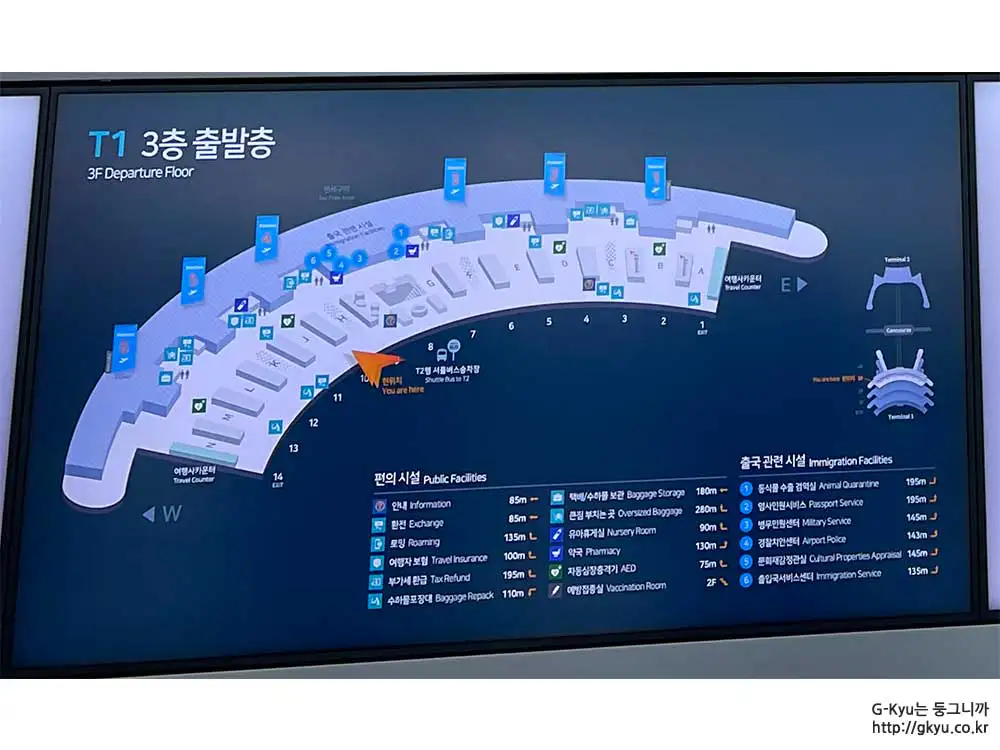
My flight to Laos was with Jeju Air. I checked and found they were ticketing at Counter L. Looking at the distance from the long-term parking lot to Counter L, parking at P2 seemed the closest.
Map of Incheon Airport Departure Hall
They say you should arrive at least 3 hours before an international flight, so I left accordingly.
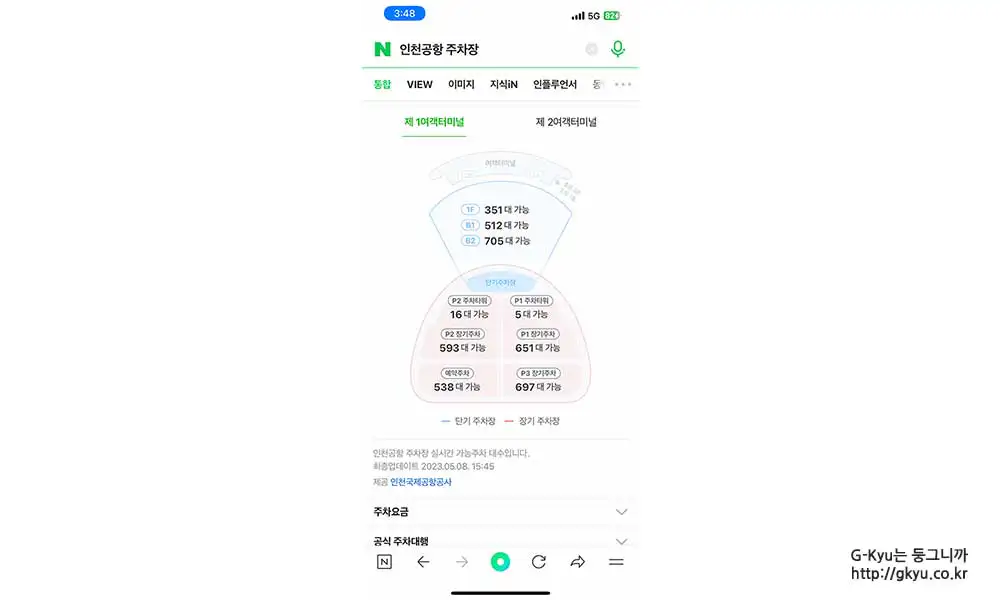
Before leaving, I checked the status of the P2 parking lot via Naver. Seeing that there were spaces available, I left with a lighter heart.
When I arrived, the P2 lot was as quiet as the app had said. I looked around, hoping to park inside the P2 West Parking Tower.
However, looking at the LED availability board, I decided it was more important to just park somewhere in this lot rather than insisting on the tower, so I parked.
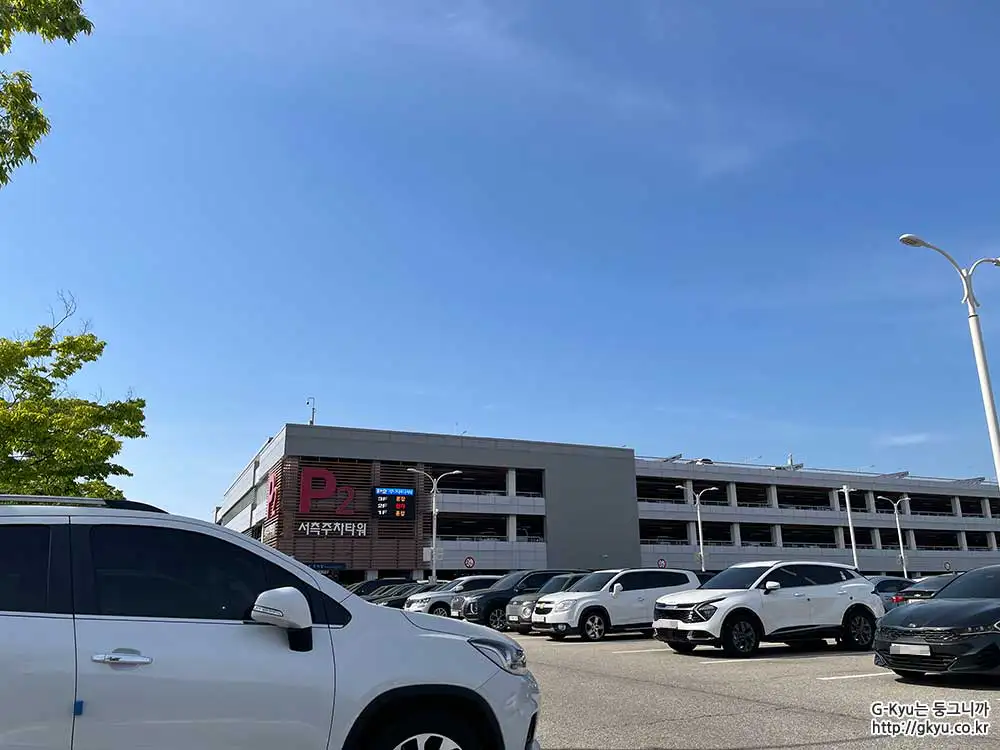
Parking inside the tower would have been like indoor parking, but parking outdoors isn’t a problem. Since it was May and the sun was strong, I parked in a spot with some tree shade.
- Long-term parking daily rate: 9,000 KRW
- Location: Incheon International Airport Terminal 1, P2 Long-Term Parking Lot
- Address: 272 Gonghang-ro, Jung-gu, Incheon
If you want to know the estimated parking fee, you can check on the Incheon Airport website. Input your entry and exit dates/times, and it calculates the cost.
If all of this sounds like too much trouble, you can just use Valet Parking.
Refer to the site below for valet services. If you pay a little extra, your body and mind can be at peace.
Automatic Roaming Guide
One of the worries when traveling abroad is mobile phone usage. Unlike at home, you have to choose between a few options.
To use your Korean number without getting hit by a “bill shock,” you can use a roaming service. It costs money, but the advantage is keeping your number active and avoiding unexpected charges.
The cheaper method is buying a local SIM card. You can buy a Laos SIM in Korea, but it costs several times more than buying it locally. So, I recommend buying it there, but there is a downside: You can’t use your Korean number, meaning you can’t receive calls from home.
While I was parking and debating which was the wiser choice, I received a text message.
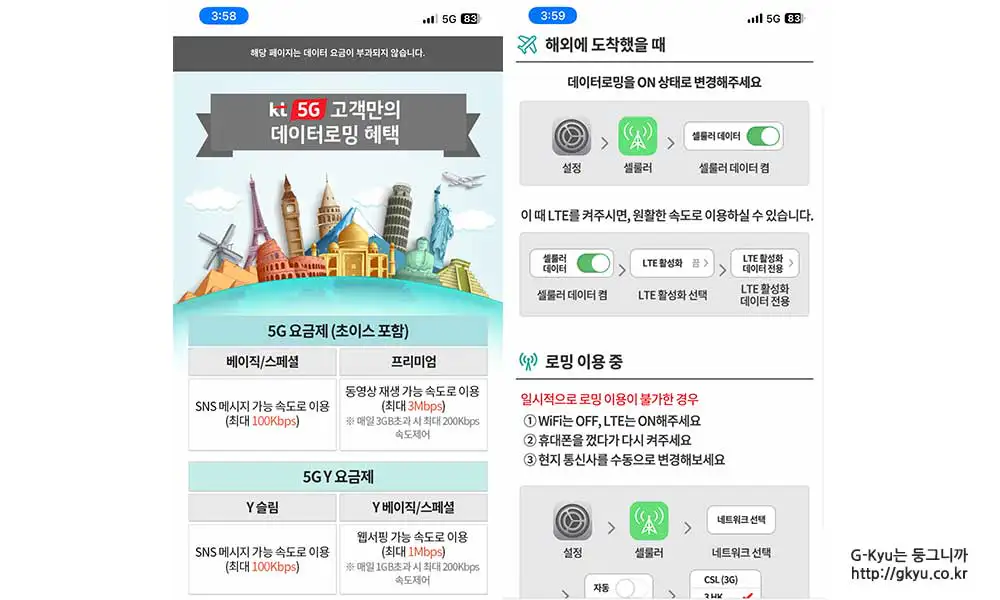
My carrier is KT. I clicked the link in the text, and a page appeared. If a user is at the airport, the carrier sends this automatically. I assume other carriers have similar services.
Simply put, it says you can use the internet without paid roaming or a local SIM. Of course, since it’s free, don’t expect speed.
If your plan is 5G-related, you can use data at a low speed—just enough for SNS or KakaoTalk text messages. I tried it later in Laos. I thought, “How slow can it be?” It was really slow. I thought my phone wasn’t connected at all.
If you are on a premium plan, you might get slightly faster speeds. My current plan is “Basic.” It offers up to 100 kbps.
100 kbps is so slow that even Google Maps doesn’t load properly. If you want usable internet speed, buying a SIM card locally is the most efficient choice. Still, having this free service is better than nothing; it gave me a strange sense of security.
With parking and roaming sorted, I began moving from the parking lot to the terminal.
From P2 Parking to the Passenger Terminal
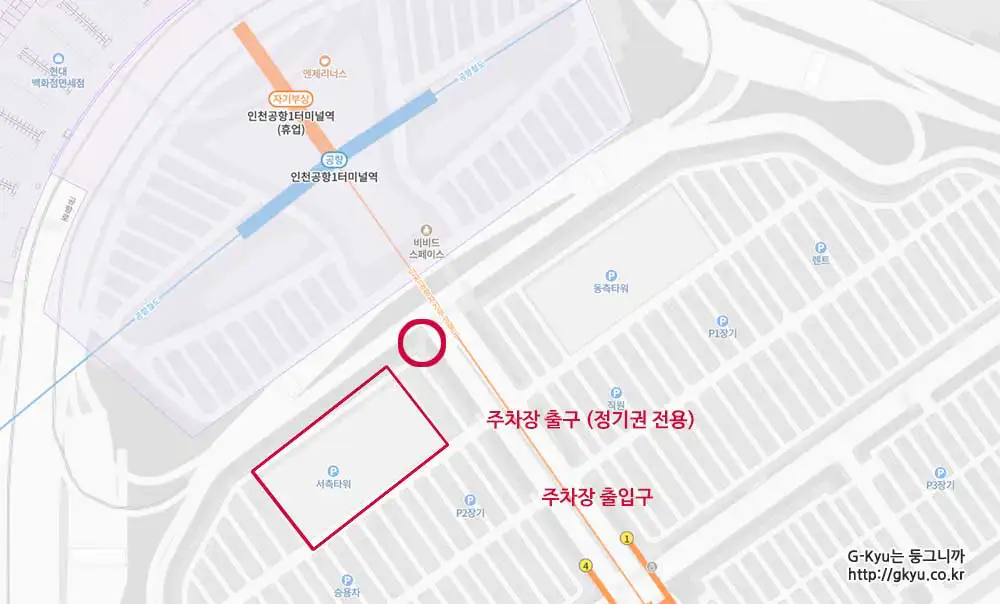
As planned, I parked in P2. From here, I walked to the terminal.
The weather was clear and the distance was walkable, which was a relief. I put on my Boston bag and dragged my carrier. Since I had packed exactly within the weight limits, I had no worries about baggage overage charges, making my steps feel lighter.
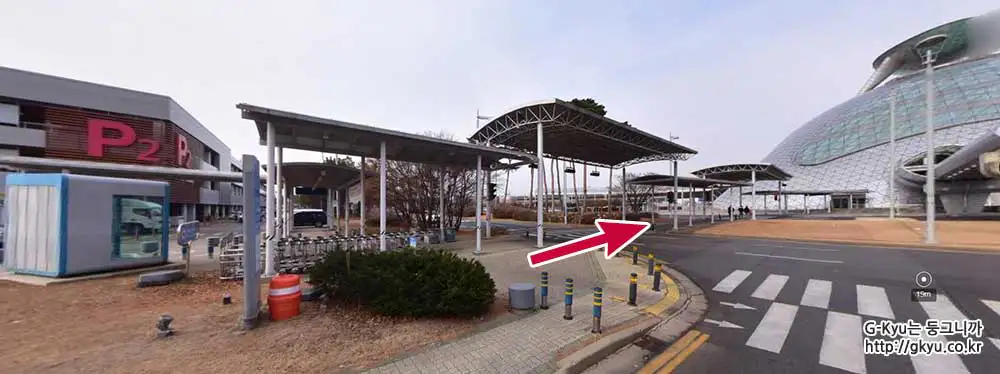
To get to the terminal, you head toward the building that looks like a spaceship, often seen on TV.
- Tip: You don’t have to walk out via the car exit. There is a small path just for pedestrians. The shortest way is to use this path. Just head toward the building at the “1 o’clock” direction from within the parking lot.
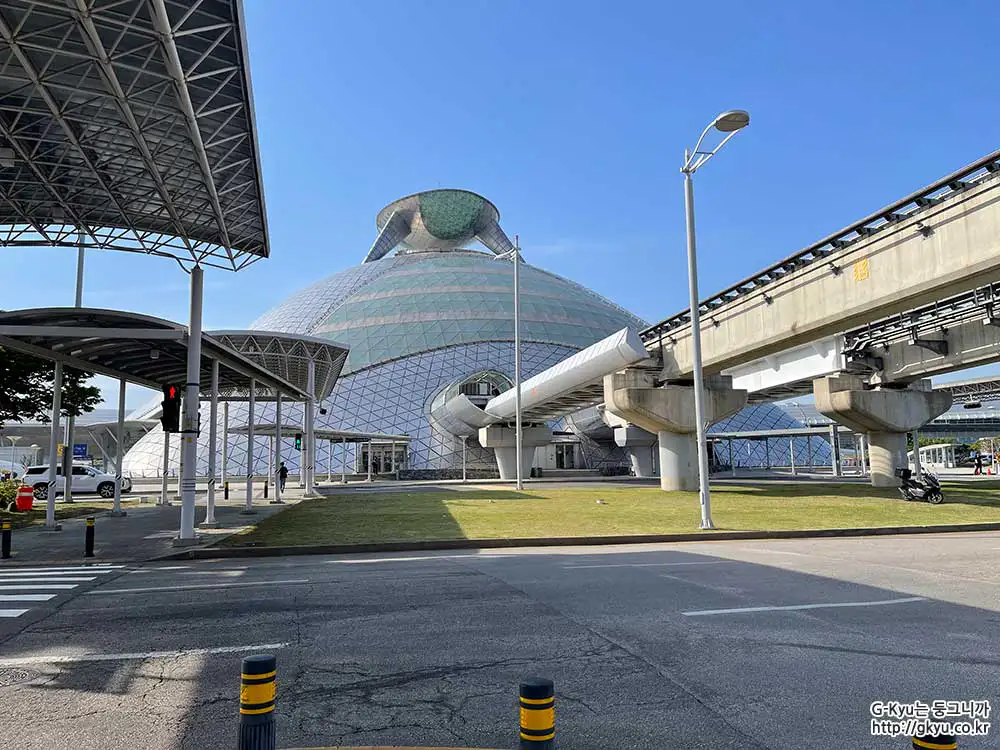
Standing at the crosswalk, I could see the entrance to the terminal.
Departures are on the 3rd Floor
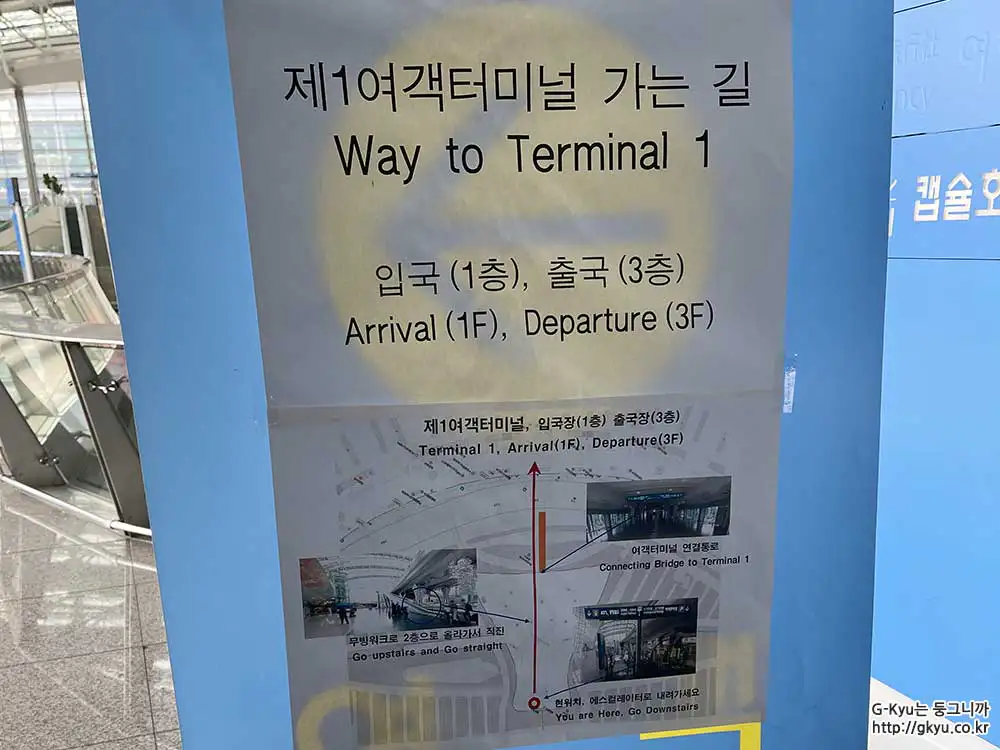
Entering the airport always gives me a fresh feeling. It’s not difficult, but the unfamiliar scenery makes me feel a bit clumsy and disoriented.
For confused travelers, friendly signs with Korean, English, and pictures welcome you. If you read this properly and still go the wrong way, there’s no cure but to let your body suffer.
To depart, I took the escalator down right in front of me. Then, I went straight and took the moving walkway up to the 3rd floor.
It seems counterintuitive—why go down just to go back up to the 3rd floor? It feels like you could just walk along the side road without going down.
But once I went down, I understood. The side road is a detour. The route I took was the shortest distance and merges with the path used by people coming from the Airport Railroad.
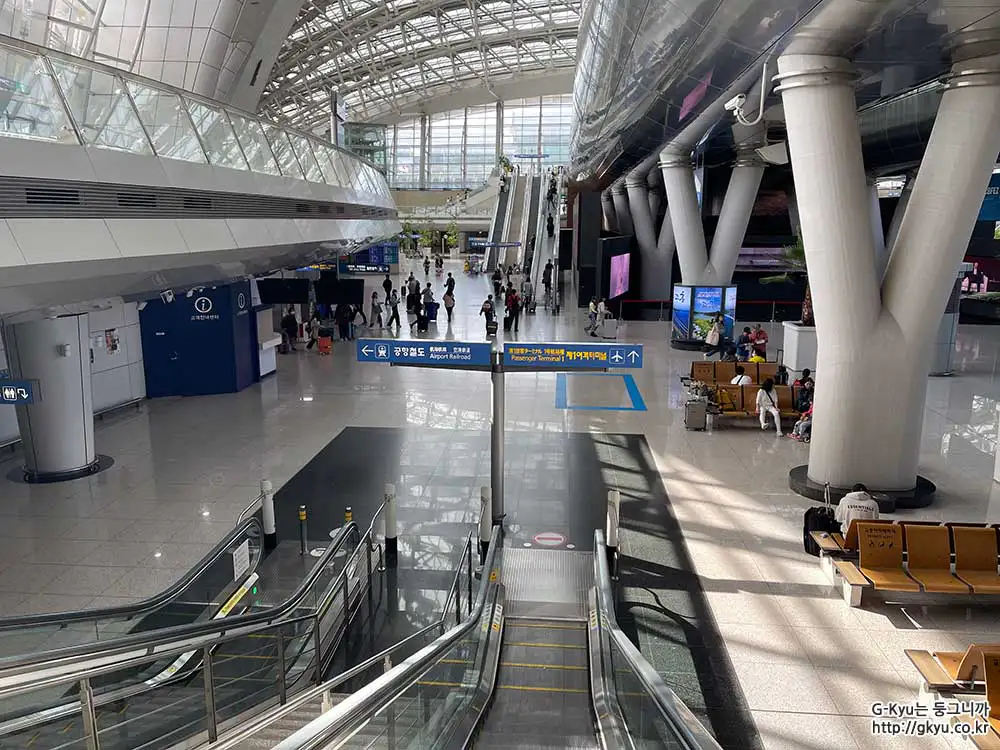
Once again, I realized that reading the signs and following instructions is better than relying on my own assumptions. I recalled the saying, “Everything I needed to know, I learned in kindergarten.”
Passenger Terminal
Walking straight on the moving walkway, you reach a three-way intersection. Any path connects to the terminal. To move efficiently, choose the direction close to your ticketing counter.
The Departure Hall has counters A through N.
- Right: Closer to A
- Left: Closer to N
- Center: Between G and H
I needed to go to the L Counter, so I went left.
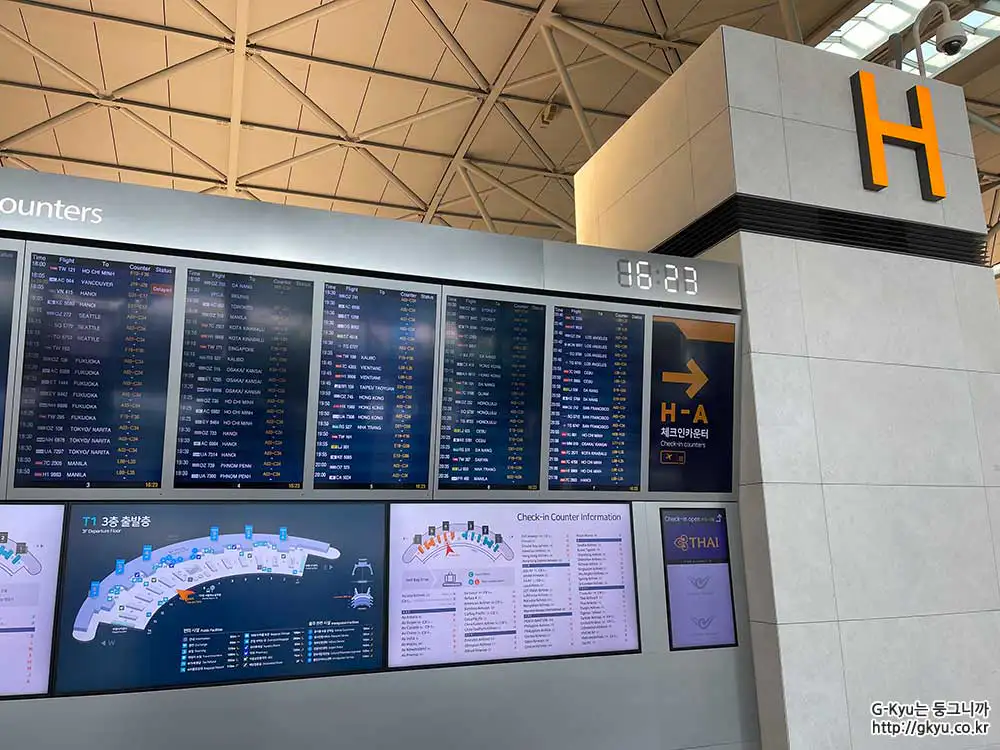
Looking at the check-in counter board, I realized I needed to snap out of it. Regular travelers wouldn’t be nervous, but it had been so long since I’d done this that I checked everything cautiously.
But really, you just have to use your nunchi (read the room) and follow what the person in front of you does. If that fails, just ask a staff member.
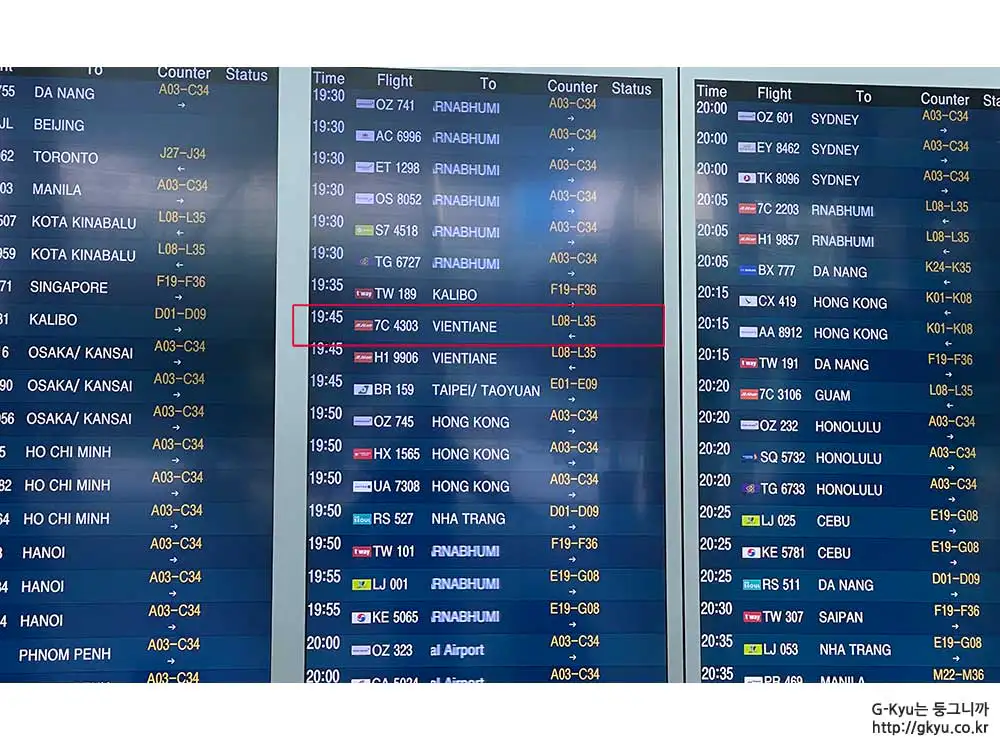
I found the flight number on the board.
- Jeju Air 7:45 PM
- Jeju Air 7C 4303 Vientiane: L08 – L35
It was 4:23 PM. Departure was 7:45 PM, boarding at 7:15 PM. Unlike a bus, you don’t show up right at departure time. You need plenty of time for check-in and security. Boarding usually starts 30 minutes prior.
Self Check-In & Baggage Drop
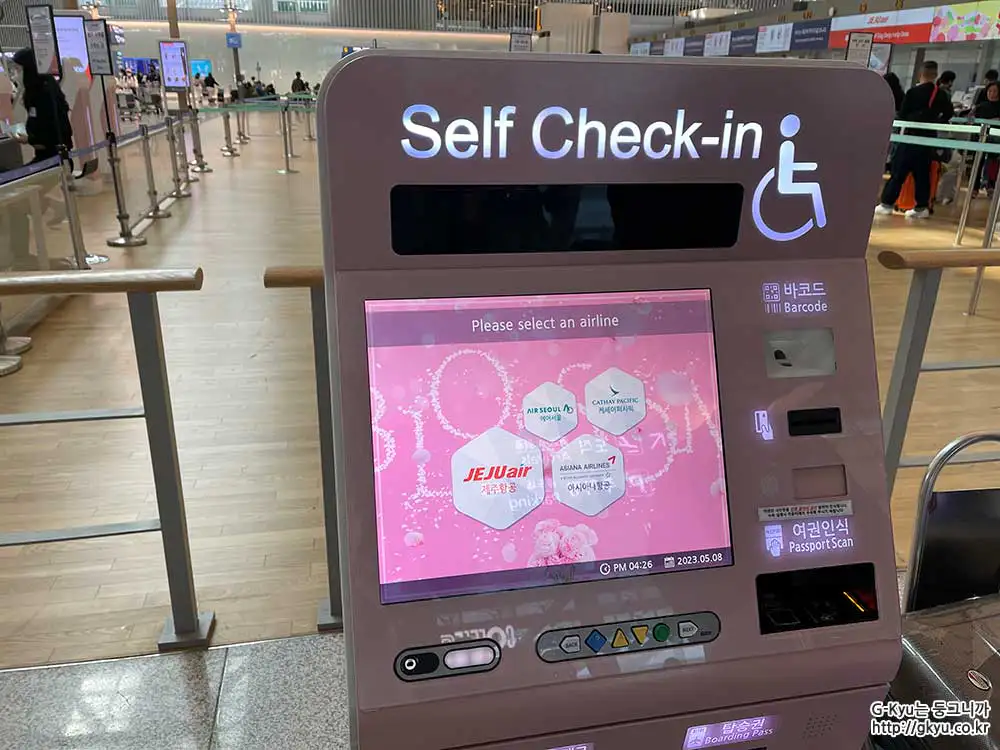
Near the L Counter, I saw the Self Check-In kiosks. You scan your passport to check in. If you’ve already checked in via the Jeju Air app or web, you can skip this.
The screen on this kiosk seemed too big for the device. The instructions didn’t fit on one page, so I had to scroll just to click the menu buttons. I don’t know if it was designed this way or if someone messed with the settings. If you didn’t think to scroll, you wouldn’t be able to click anything.
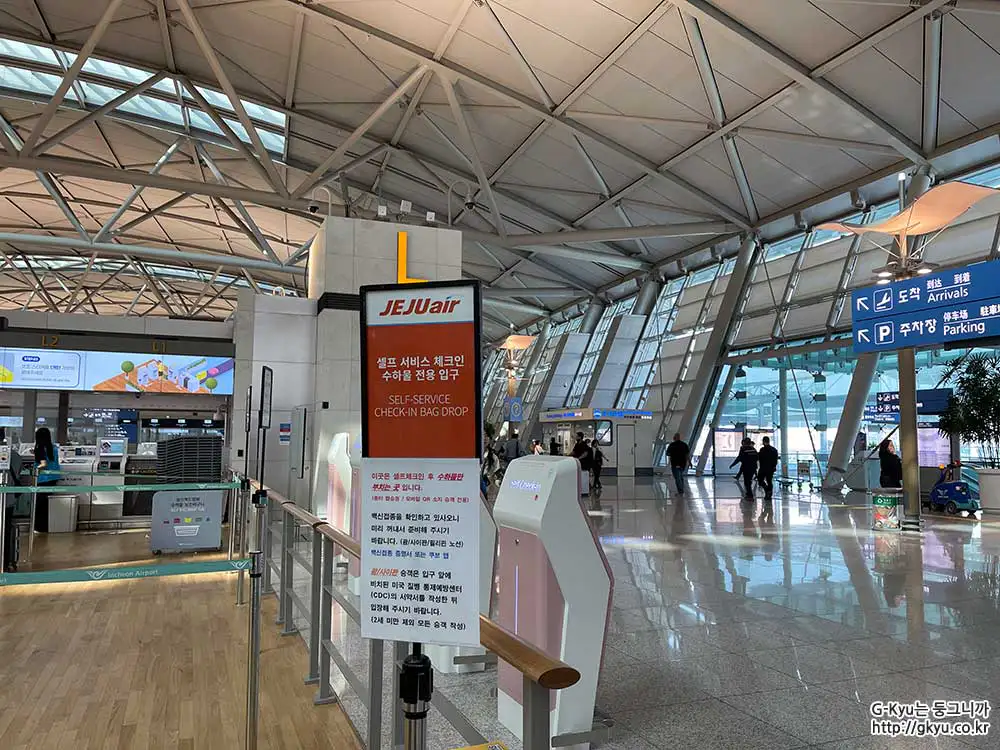
After check-in comes the baggage drop. This is for sending your large suitcase to the cargo hold. Even though it’s “self-service,” staff in blue vests are there to help, so it’s not hard.
Jeju Air staff checked my passport and boarding pass. Once cleared, I stood in line for the bag drop. The procedure is simple: watch the person in front and copy them.
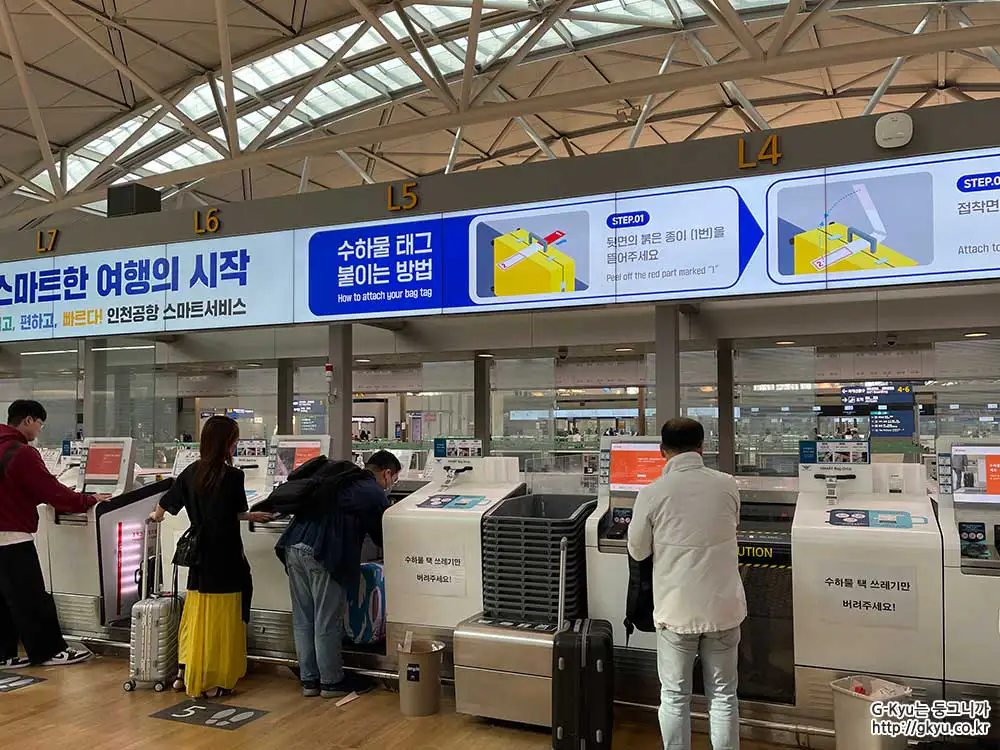
- Scan your boarding pass/passport on the left machine.
- The translucent door opens.
- Place your suitcase inside with the wheels facing inward.
If this is confusing, checking the Incheon Airport YouTube channel beforehand helps.
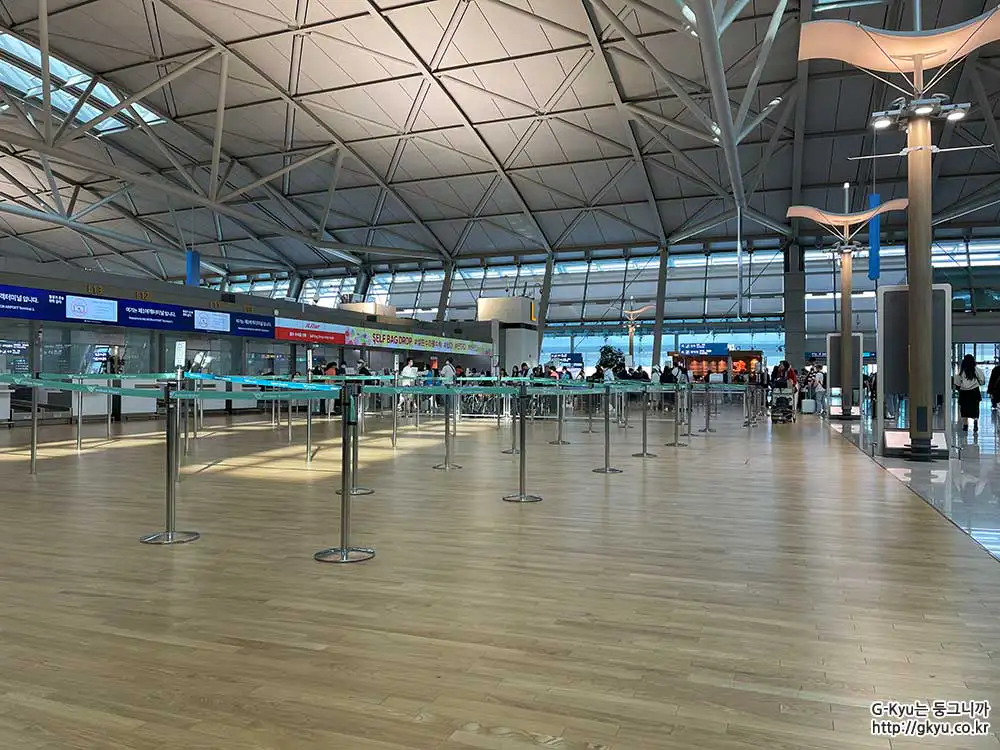
With check-in and baggage done, my work in the main hall was finished. I headed to the departure gate.
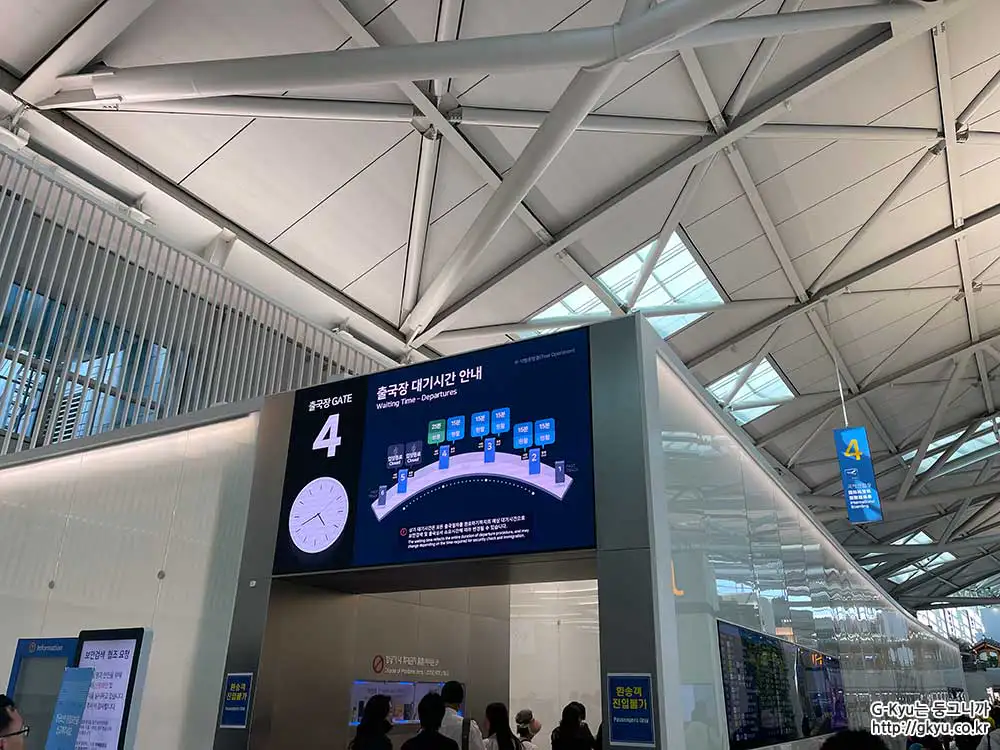
I went through security (laptop out, bag in a bin), walked through the body scanner, and then cleared immigration. Since I’ve traveled before, I used the automated immigration gate.
Duty-Free Area & Dinner
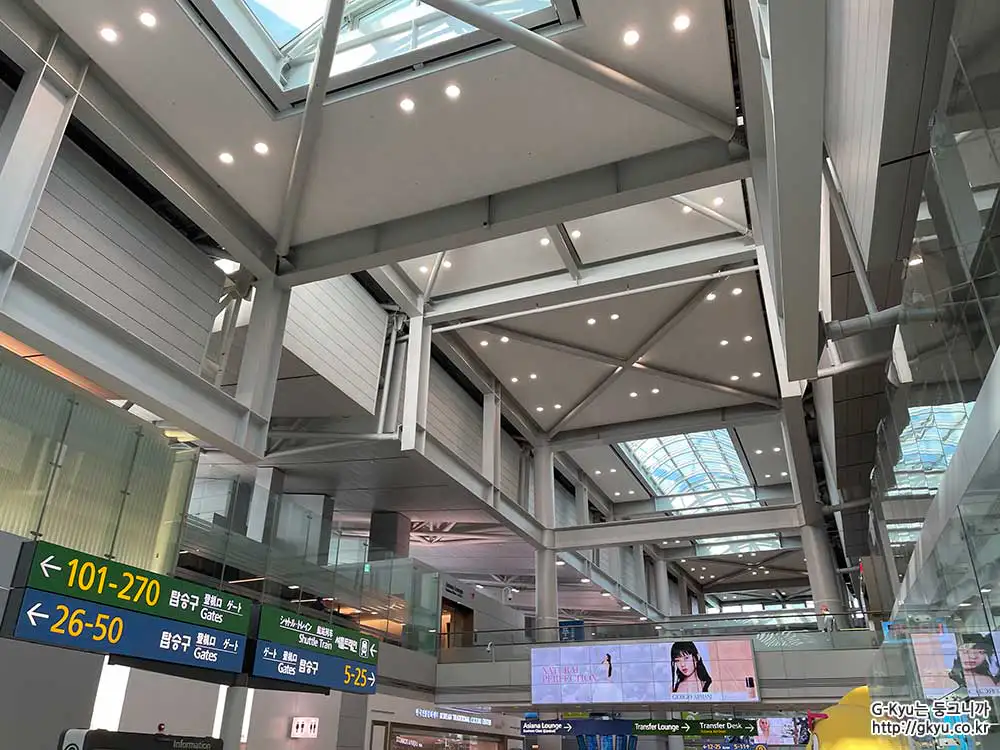
Now that the complicated procedures were over, I was in the most exciting part: the Duty-Free area.
With the USD exchange rate rising, buying luxury goods here didn’t seem like a bargain. But if you need something, buy it regardless of the rate.
There was a Starbucks here, too. I decided to grab a coffee before boarding.
I headed to the food court for dinner. I parked my heavy carry-on cart in the designated area (carts aren’t allowed inside the food court) and took the escalator up.
Restaurant: Sonsuheon
It looked relatively quiet. I ordered at the counter:
- Susam Naju Gomtang (Naju-style Beef Bone Soup with Ginseng): 13,000 KRW.
Unlike regular restaurants, they don’t give you free water. You have to buy a 500ml bottle for 1,000 KRW.
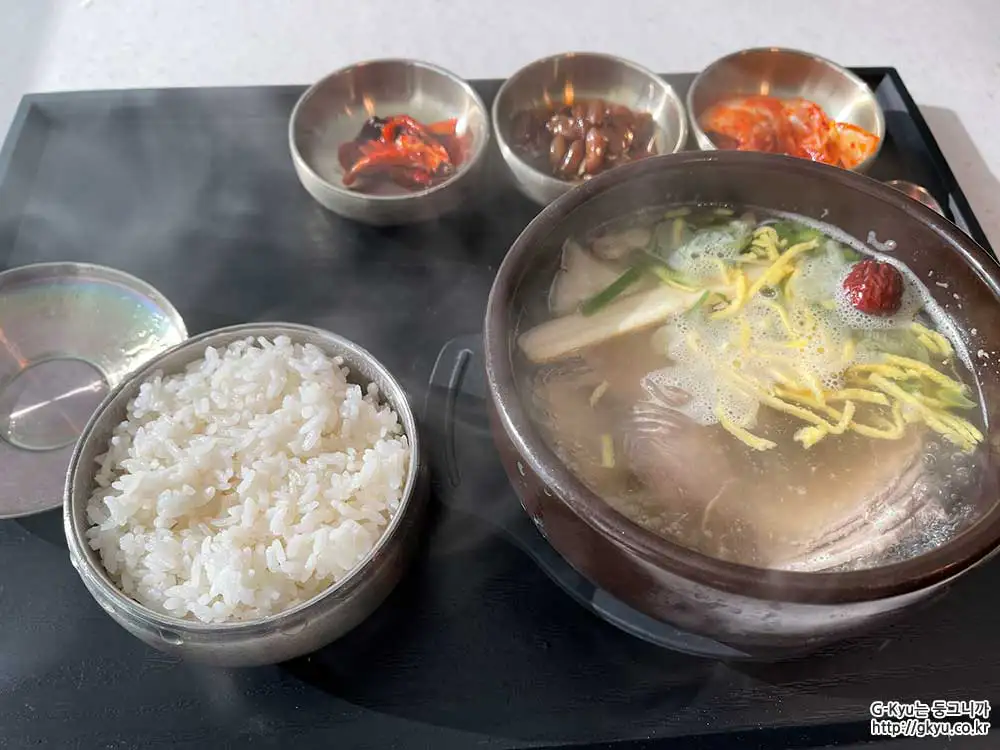
I once ate fried food before a flight and felt terrible the whole way. To soothe my stomach and nerves, I chose this warm, non-spicy soup. It was comforting. Since Jeju Air (LCC) doesn’t provide a meal, I had to eat now. Arriving in Vientiane at 1 AM Korea time (11 PM local time) meant no restaurants would be open there.
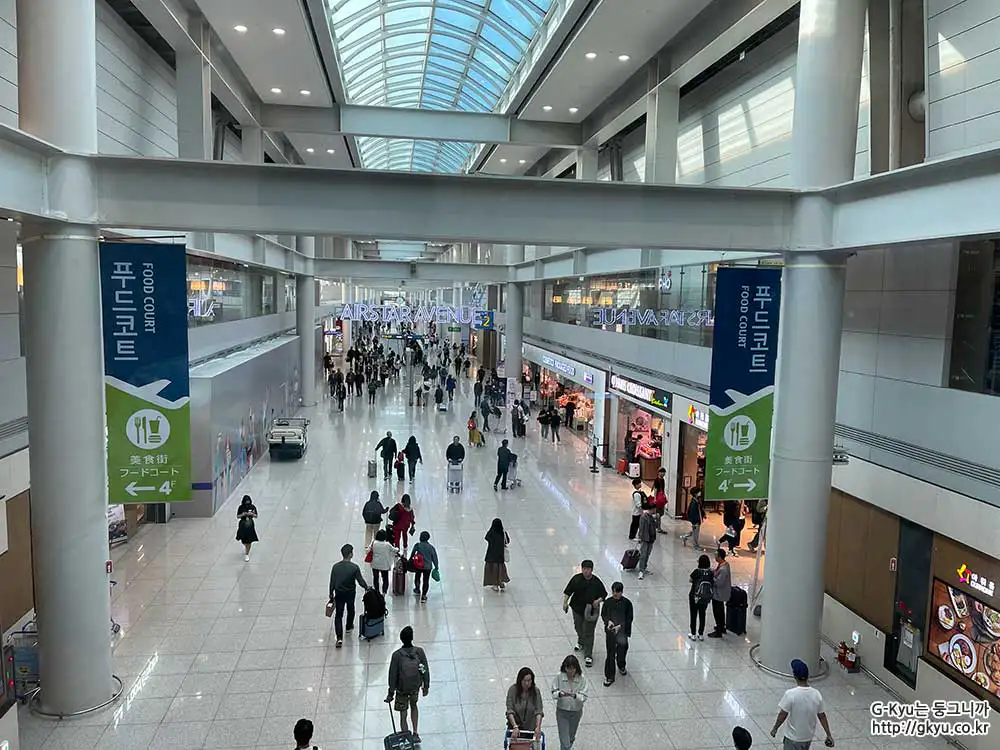
After eating, I had about 1.5 hours left. I wandered the duty-free area, watching people. It was fascinating seeing everyone waiting for their flights. It looked like the scene from the movie Along with the Gods where people flock to the afterlife… but that’s a morbid thought, so I stopped thinking about it.
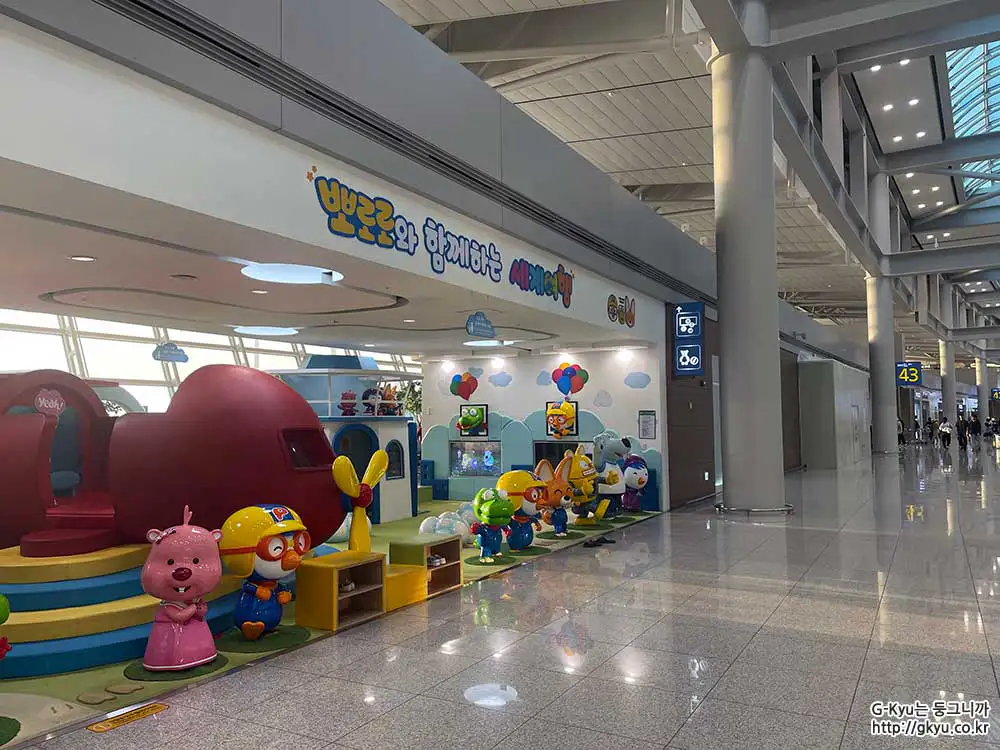
I saw a Pororo play area for kids—Pororo’s fame clearly hasn’t faded.
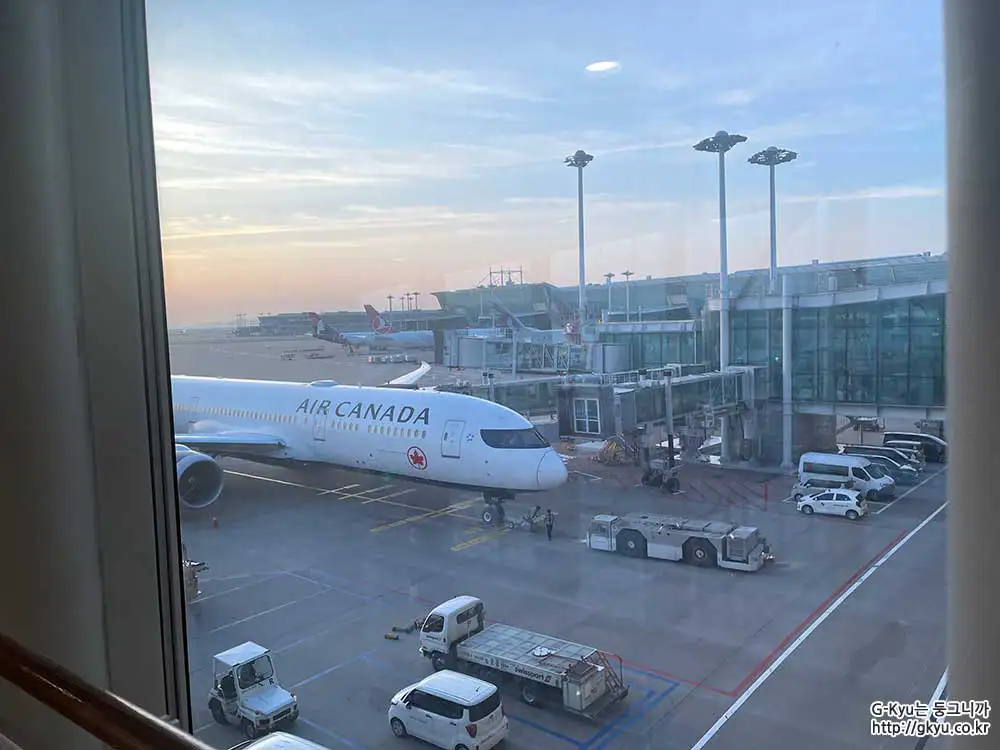
Through the window, I saw an Air Canada plane and daydreamed about going to Canada.
As the sun set, I grabbed an Iced Americano (Grande, 5,000 KRW) from Starbucks to wash down the heat of the ginseng soup.
Departure for Vientiane
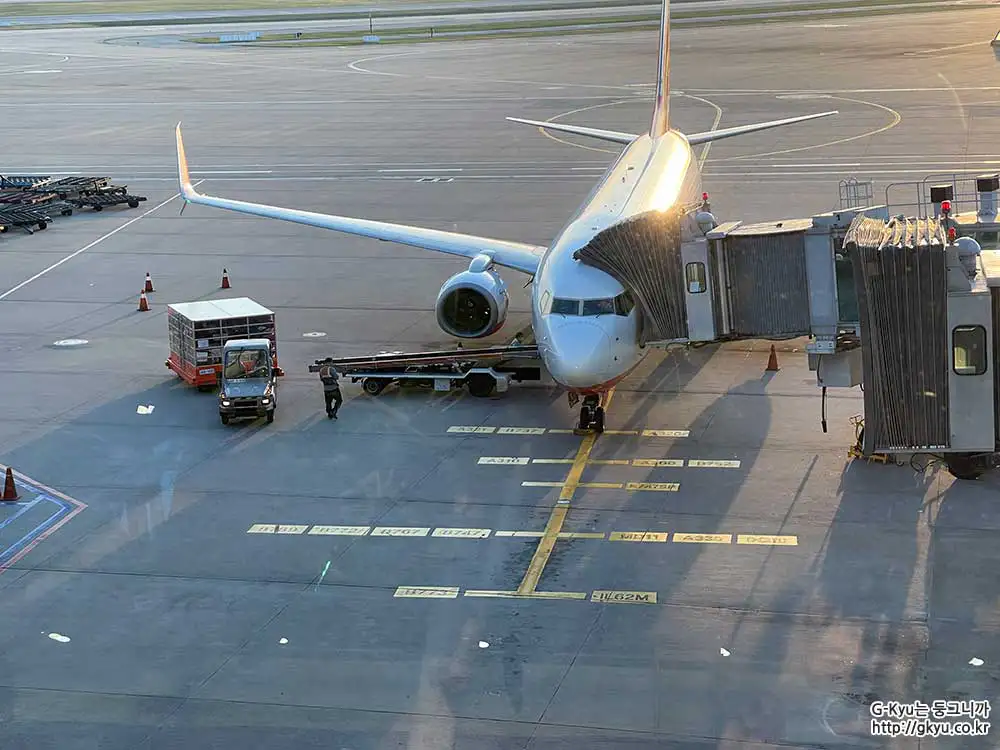
I saw the belt loader vehicle loading luggage. My bag is in there, I thought. Please don’t throw it.
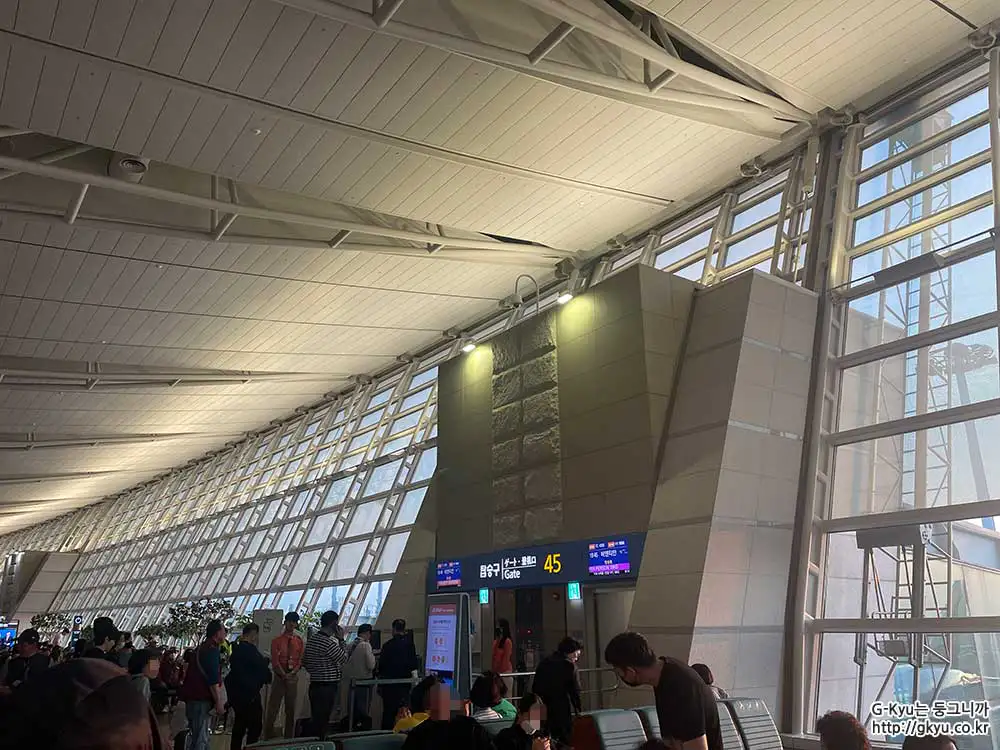
Boarding began. People lined up. Since seats are assigned, some people sat and waited until the line died down, but most (including me) just wanted to get on the plane and leave, so we lined up.
Jeju Air staff in tangerine-colored uniforms checked passports and tickets, occasionally speaking English for foreign passengers.
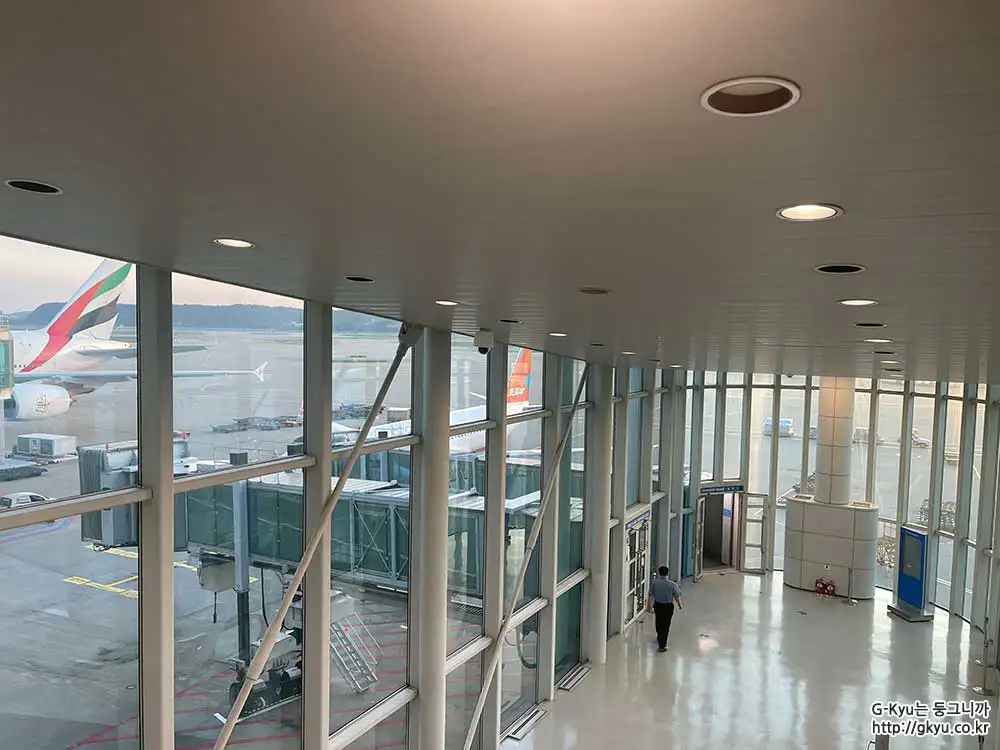
It had been over 3 hours since I arrived at the airport, and finally, I was boarding.
Seat & Legroom
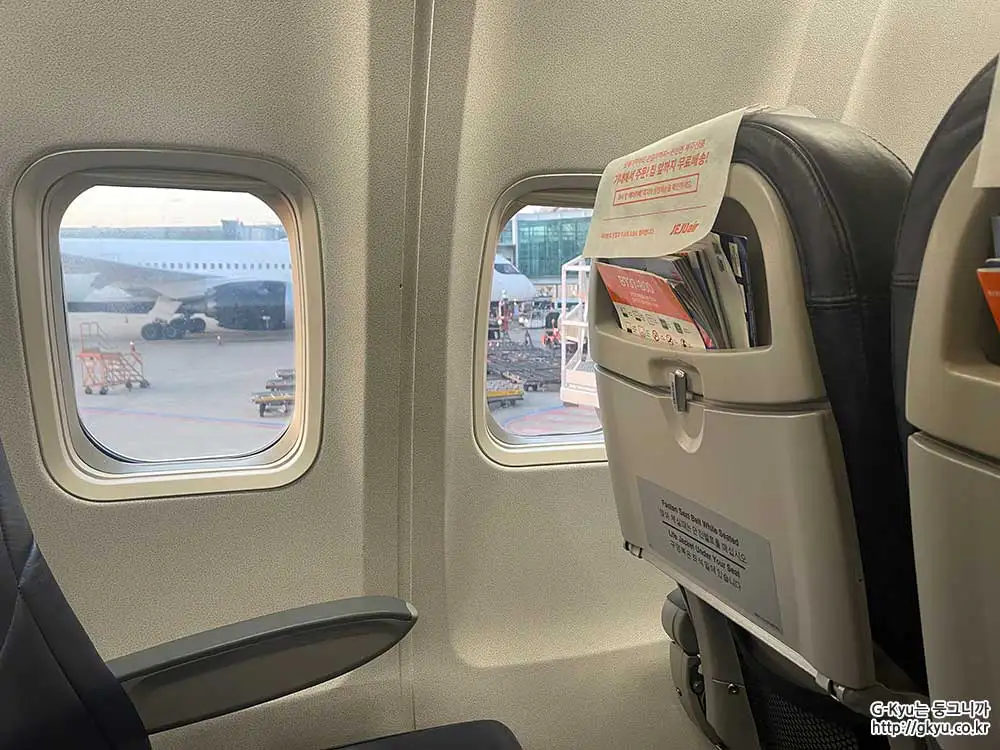
Thanks to lining up early, I got to my seat quickly. Jeju Air allows seat selection 24 hours prior via mobile/web.
- Tip: It works like university course registration. As soon as the 24-hour mark hits, log in and grab a seat.
I picked an aisle seat in the second most expensive tier (Standard/Front zone). I chose the aisle because I didn’t want to be trapped in the 3-3 configuration if I needed the restroom.
The downside: The A/C blew directly on me. I could have adjusted the vent, but I was too lazy.
I stowed my carry-on overhead. To save space, bags must be placed vertically (wheels in first).
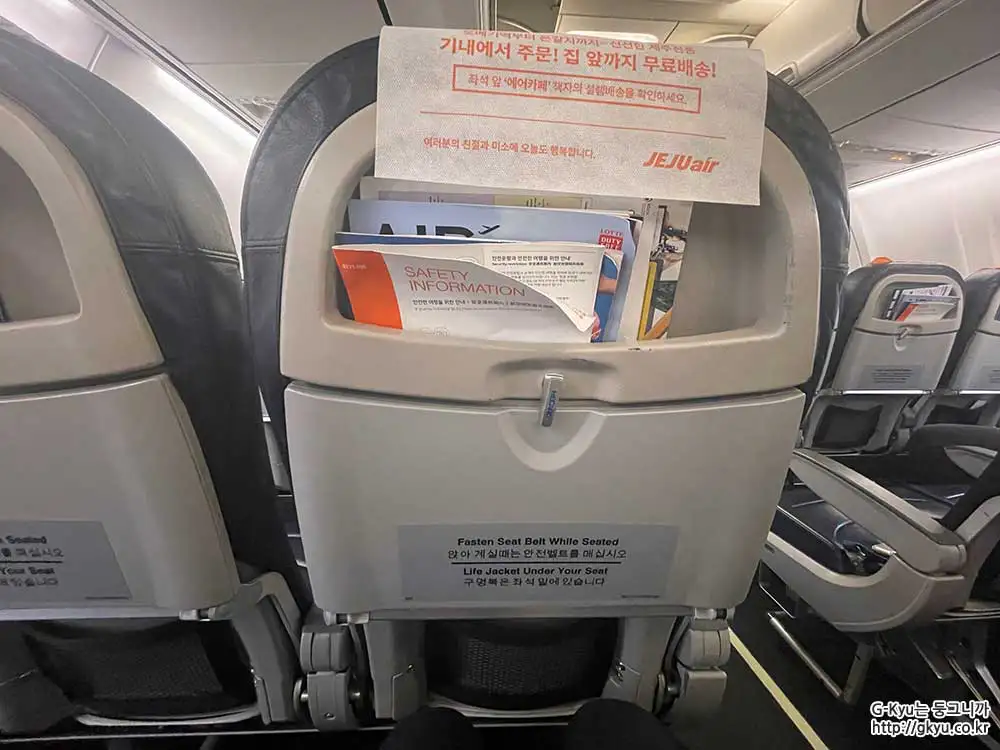
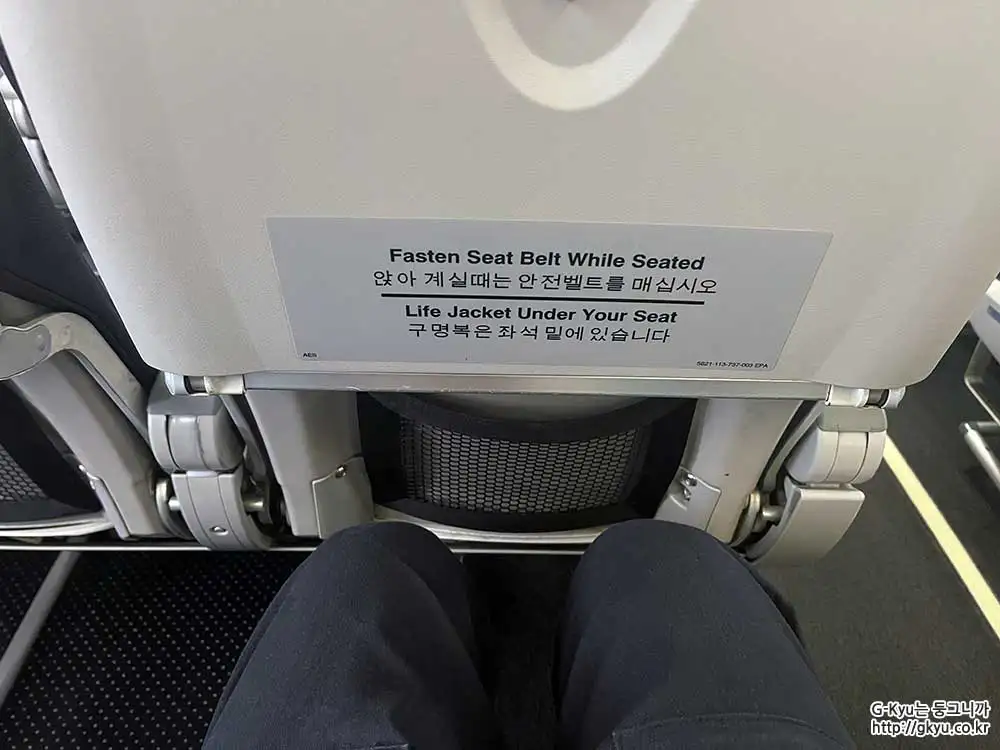
Sitting down, there was a little space left in front of my knees. Not uncomfortable, but not exactly “comfortable.”
Departure
The plane accelerated on the runway—isn’t this speeding?—and then the wheels lifted. We were airborne.
The flight time was listed as 5 hours 15 minutes, but the pilot announced it would be just under 5 hours. It’s a psychological trick; hearing “4 hours something” made it feel much shorter.
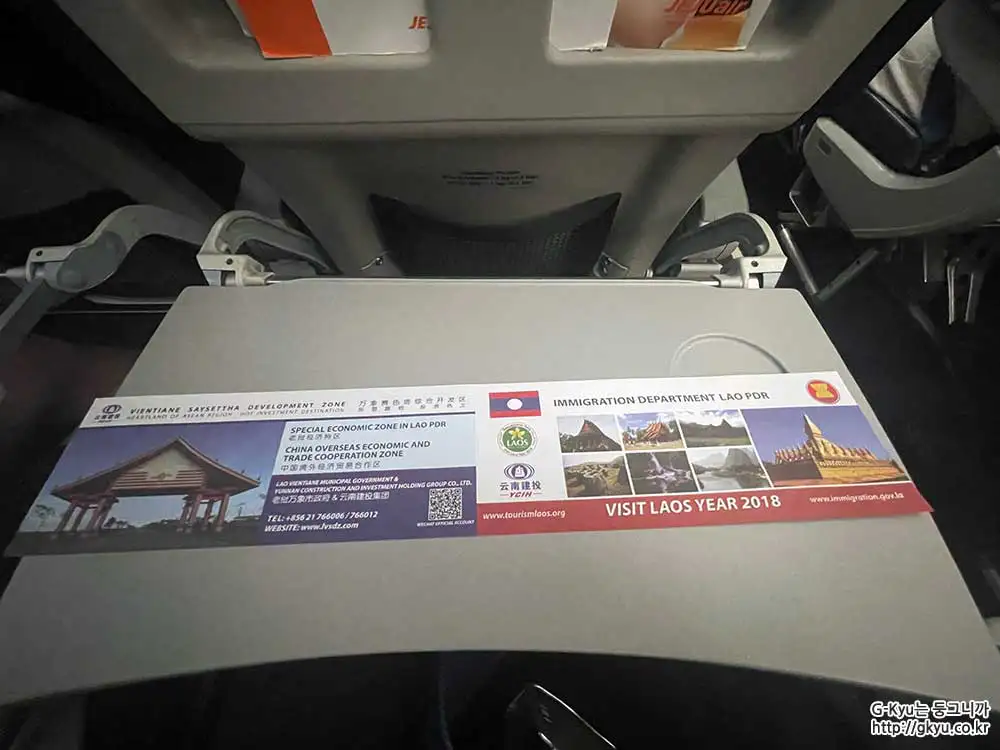
Once we reached cruising altitude, the crew handed out arrival/departure cards.
They gave out one tangerine-colored pen per row (sharing 1 pen among 3 people).
I filled out the card: Name, passport details, purpose of travel, hotel name, etc.
- Note: You submit this card to the immigration officer, not the flight attendant. Fill out both sides. One half is taken at entry; keep the other half safe in your passport for departure.
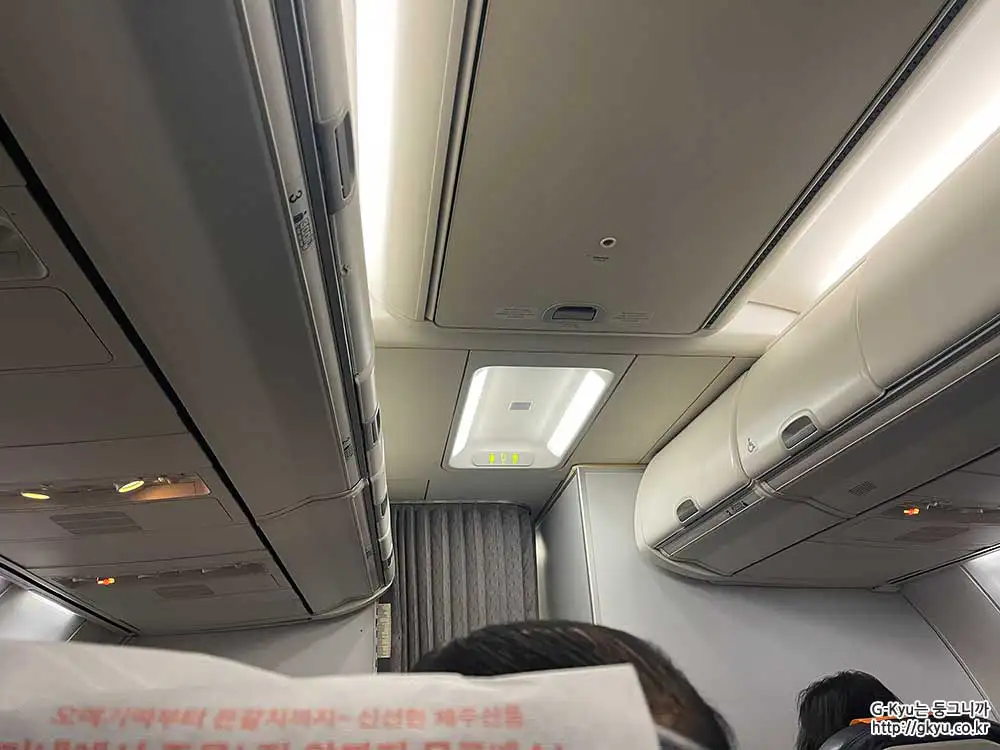
The “Internet Cafe” (PC Bang) Effect
Since it was dinner time on a 4+ hour flight, people started ordering food.
A small cup of Shin Ramyun + Starbucks canned coffee seemed to cost about 10,000 KRW.
The smell of one person’s ramen wafted through the cabin, triggering a chain reaction. Suddenly, everyone was ordering ramen. It’s the classic “PC Bang effect.”
Jeju Air (LCC – Low Cost Carrier)
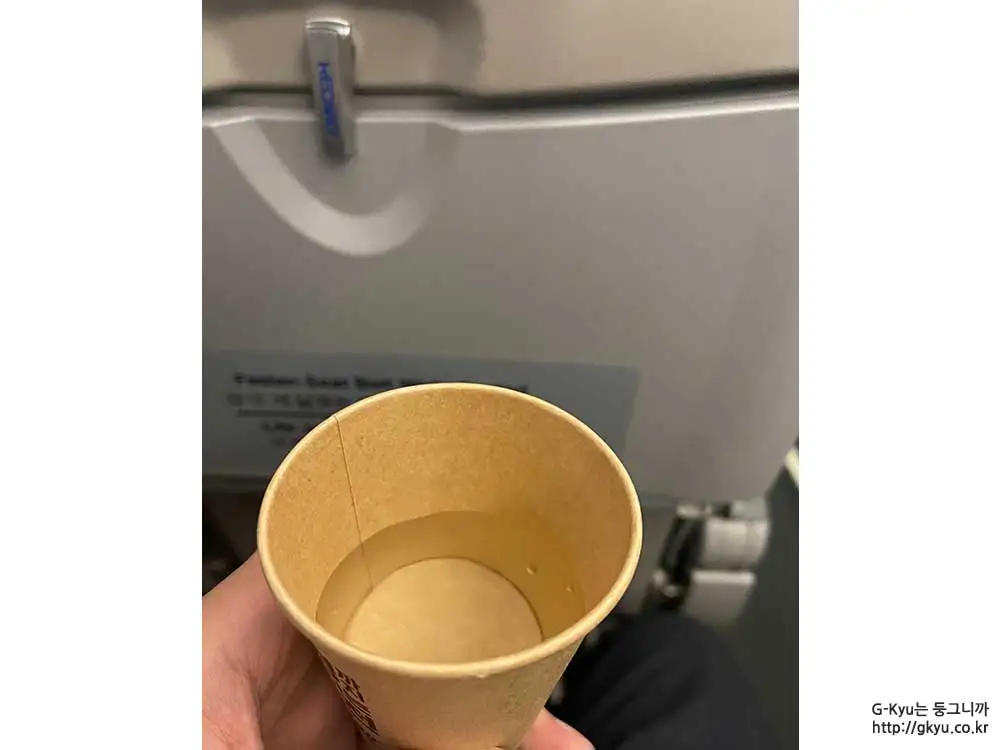
Jeju Air is an LCC. This means no free in-flight meal. It’s an option you must pre-purchase. The only free thing is water, and even then, they seem short on cups, so you have to ask for a refill using the same cup.
If you want a Full Service Carrier (FSC), choose Lao Airlines. They use the same small planes but provide meals.
Arrival in Vientiane
I wasn’t lucky enough to have an empty seat next to me. The flight was full of tour groups.
As we neared Vientiane, the pilot announced the weather: Over 30°C (86°F) and raining.
The door opened. My first thought upon stepping out:
“Hot. Humid.”
It was 11 PM local time.
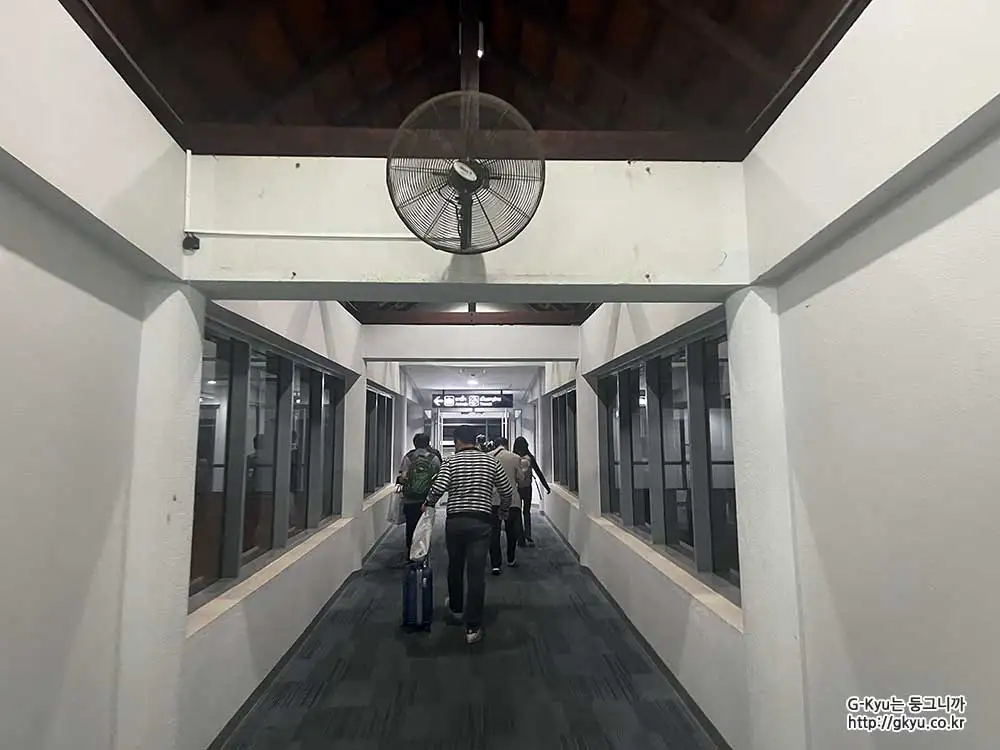
I followed the crowd to immigration. The officer in uniform silently checked my passport and card, told me to look at the camera, and stamped my passport. No questions asked. It was fast.
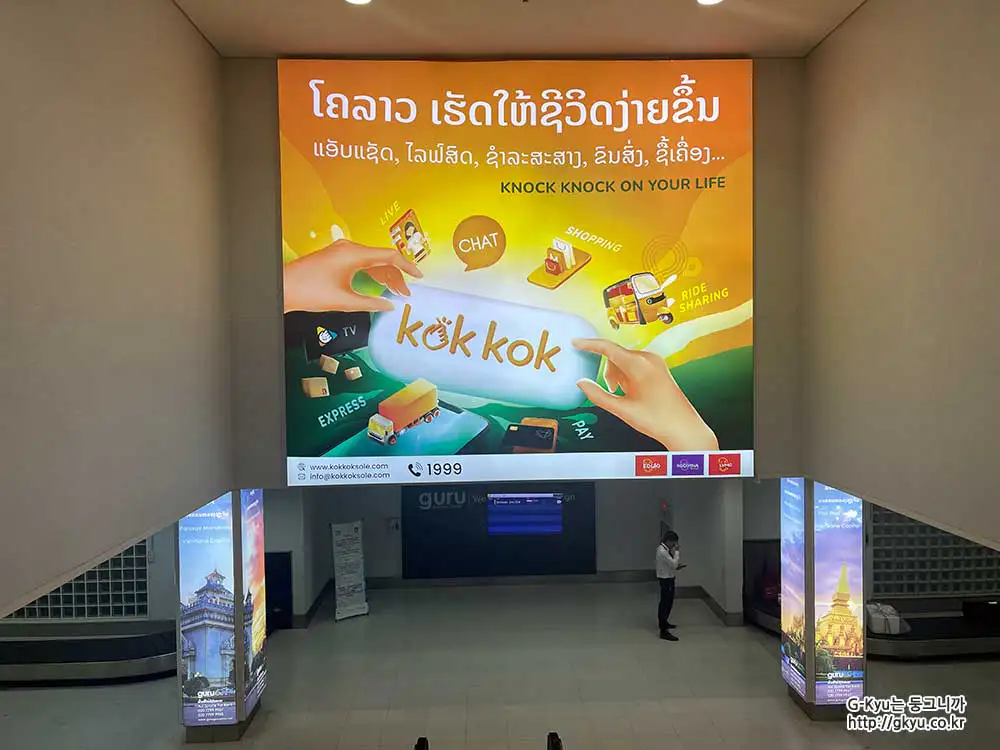
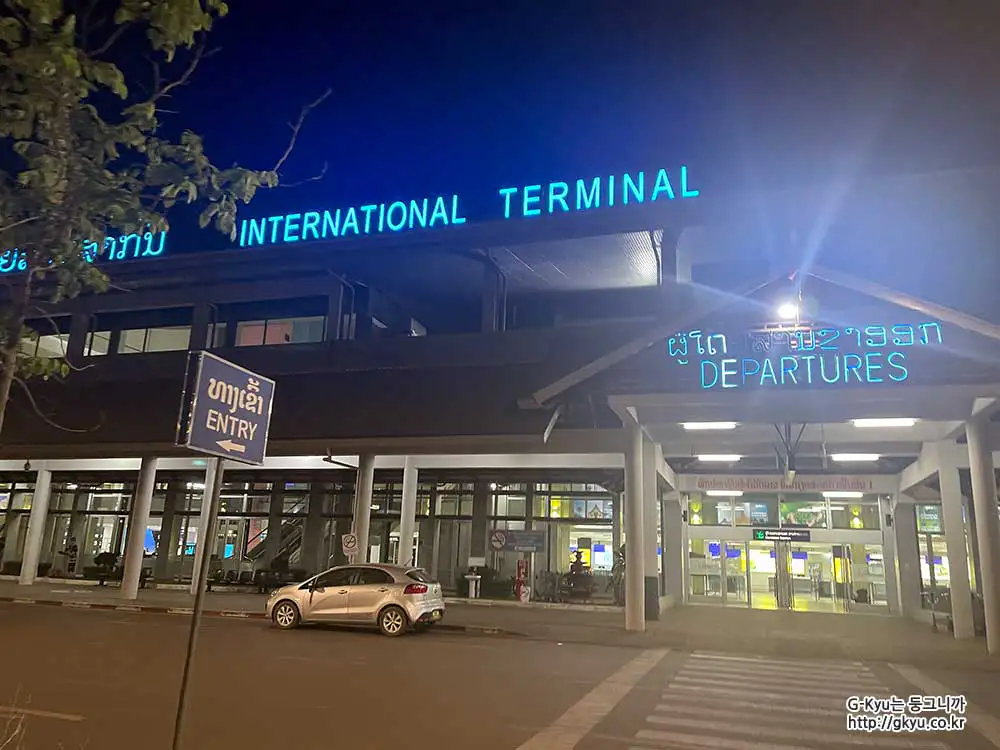
I went down the escalator to baggage claim. Wattay Airport felt dim, the lighting darker than in Korea.
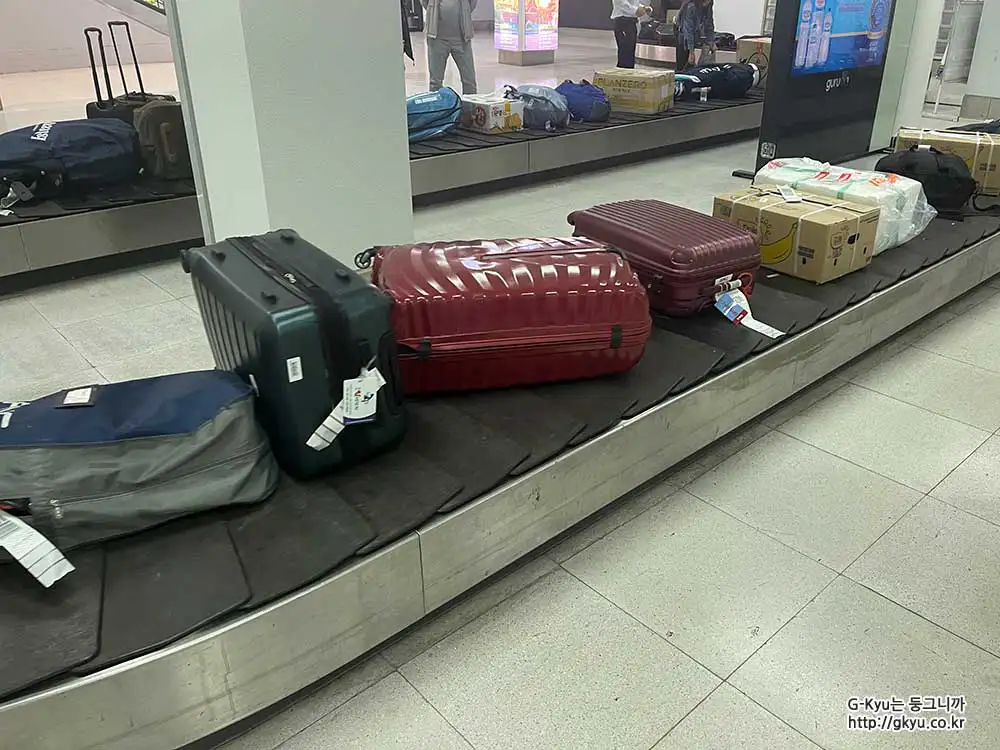
The baggage claim area felt more like a bus terminal than an airport.
My bag came out quickly—about 5 minutes.
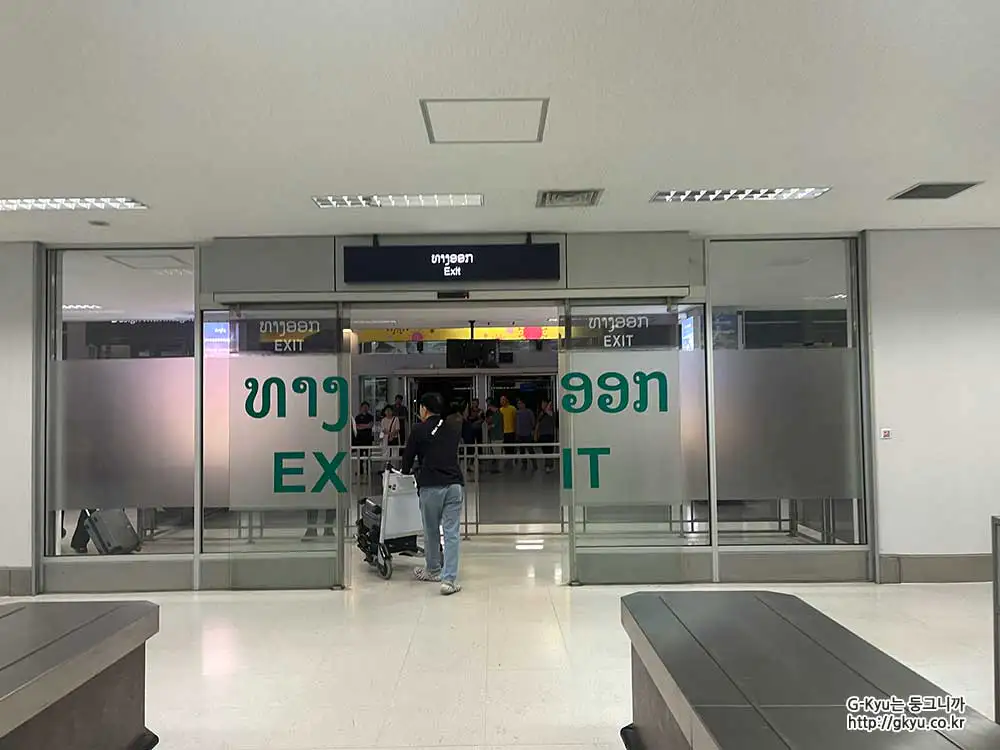
Taxi to the City
I walked out the exit, which felt like a gateway to a new world. Many Koreans were holding picket signs waiting for people, but I had no one meeting me.
The first person I met was a taxi driver.
“Taxi? Taxi?”
Since I needed one, I followed him to the official taxi counter right in front.
- Fare: $7 USD (Fixed rate).
- Payment: I gave $10, and they gave me change in Lao Kip.
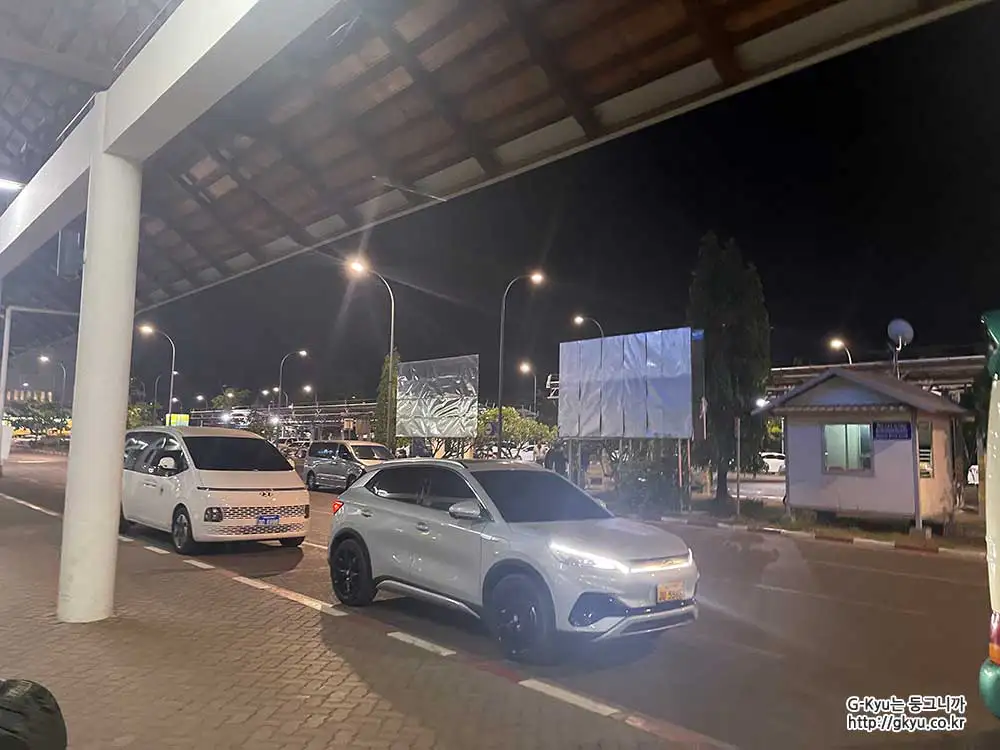
I got a receipt and followed the driver outside. He loaded my bags into a white Hyundai Avante (badged as “Elantra” for export).
- Location: Wattay International Airport
- Address: P.O. Box 3175, Vientiane Laos
To Crowne Plaza Hotel
The driver asked where I was going.
“Crowne Plaza Hotel.”
Locals pronounce “Plaza” as “Paja.”
“Ah, Crown Paja. Okay.”
I asked, “Is it about 10 minutes?” He said yes. I trusted him about 60%.
The road to the city was quiet. I saw a few cars, motorbikes, and a club, but most shops were dark. After about 10 minutes, I saw the sign CROWNE PLAZA HOTEL. The end of a long day was finally in sight.
- Location: Crowne Plaza Vientiane
- Address: Nongduang Nua Village, 20 Rue Samsenthai, Vientiane 01000, Laos