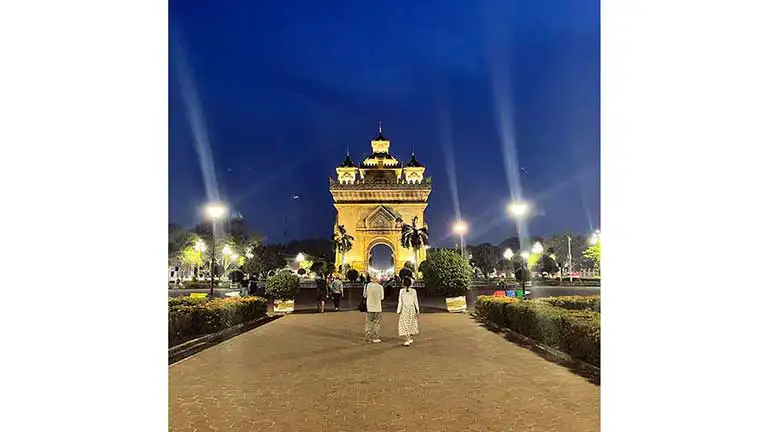
An Impromptu Stop at Patuxai
When we first entered the massage spa, the sun was still shining brightly. By the time we emerged, deeply relaxed from the gentle Lao massage, the sun had set, and the evening had fully settled in. My local guide suggested it was time for dinner, and we climbed into the car to head to the restaurant.
On our way, the grand silhouette of Patuxai, one of Laos’s most iconic monuments, loomed in the distance. To the locals, it’s a building they pass by every day—hardly a source of overwhelming excitement. But through the eyes of a traveler, who never knows if or when they might return, capturing a photograph here felt like a necessary ritual.
Though I planned to stay in Vientiane for a few more days and figured I could visit anytime, travel is inherently unpredictable. So, we decided to pause our journey and pulled into a nearby parking lot.
In hindsight, this impromptu stop was a stroke of luck. Had we not stopped then, our tight schedule might have prevented a proper visit altogether. Plus, experiencing the monument at night, free from the scorching daytime sun and beautifully illuminated, offered a much more relaxed atmosphere. As we tried to park, a local police officer approached, seemingly telling us parking wasn’t allowed. Quick on his feet, my guide bought us some time, promising we would only be a moment.
The Irony and Grandeur of the Victory Gate
Patuxai, often referred to as the Victory Gate, is a landmark with a fascinating history. Its design began in 1957, but it wasn’t completed until 1968. Taking a decade to build a monument of this size seemed unusually long, but I learned that construction was repeatedly halted due to political instability and military coups. Despite these hurdles, it was finally completed, cementing its place as Vientiane’s premier symbol.
The monument was built to commemorate Laos’s independence from France, as well as to honor the soldiers who perished during World War II and the 1949 independence war. While its overall structure heavily mirrors the Arc de Triomphe in Paris, a closer look reveals intricate Laotian motifs woven throughout its design. Nearby sits the Nam Phou Fountain, which hosts dazzling, illuminated water shows at scheduled times during the night.
There is a famous, somewhat ironic backstory to Patuxai: the United States had provided Laos with funds and cement intended for the construction of a new airport runway. Instead, the Laotian government used the materials to build this monument. The exact reasoning remains a historical curiosity—perhaps a towering symbol of national pride was deemed more urgent than a runway at the time. Today, regardless of its origins, it stands as an absolute must-visit destination for anyone traveling to Vientiane.
A Photoshop Dream and a “Swallow Apartment”
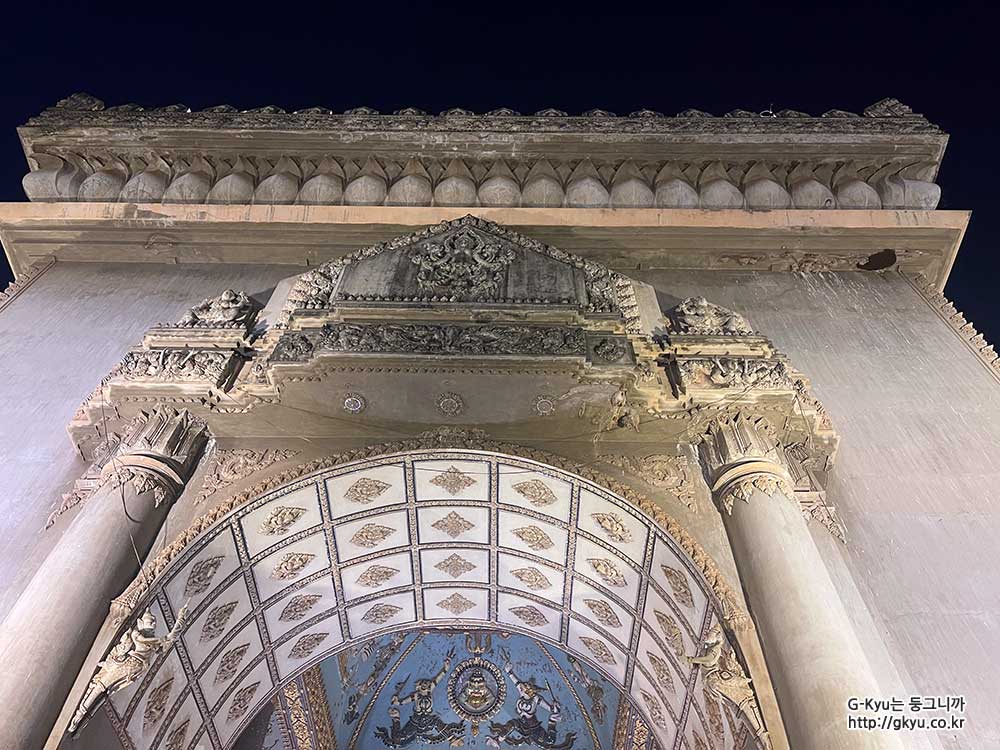
Approaching Patuxai, its sheer scale is awe-inspiring. Standing seven stories high, 49 meters tall, and 24 meters wide, it beautifully marries Western architectural forms with Eastern artistic details.
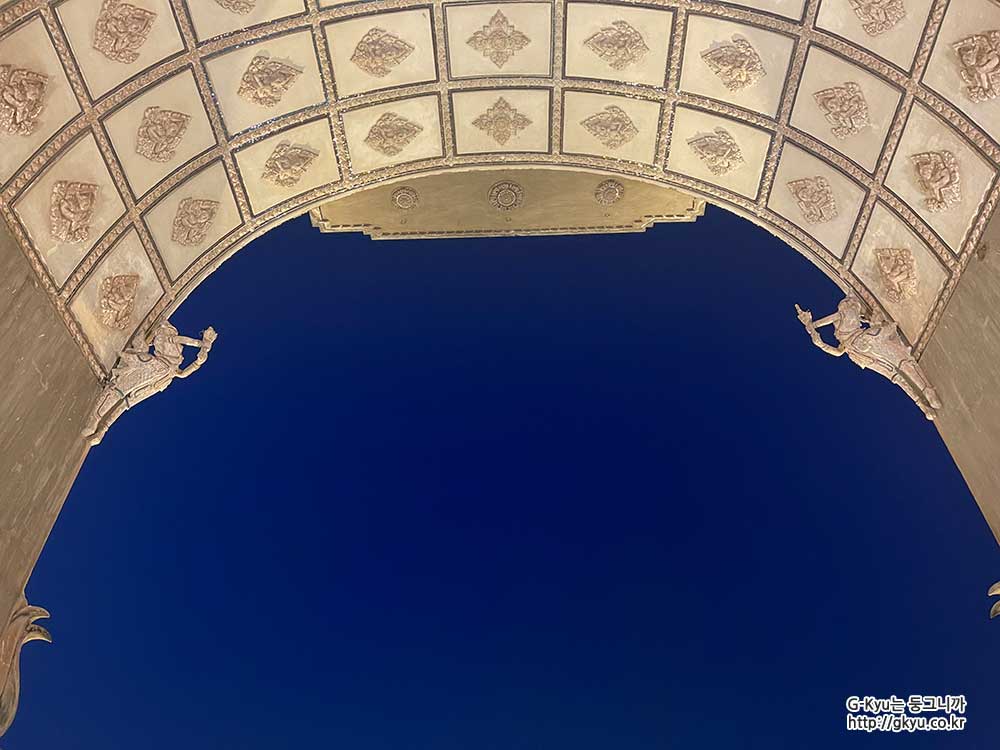
As a modern traveler, my very first, unfiltered thought upon seeing the monument’s clean silhouette against the night sky was: “Wow, this would be so easy to cut out (remove the background) in Photoshop.” Immediately followed by: “The graphics here are incredible.”
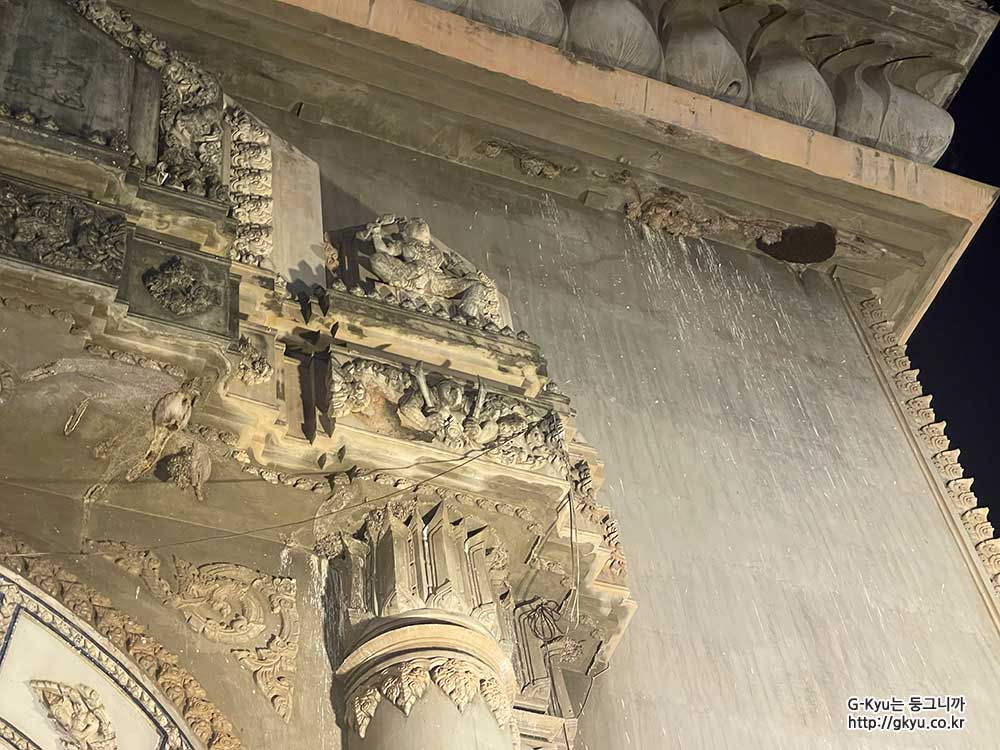
Beyond the intricate carvings, what captured my attention the most were the swallows. It has been a long time since I’ve seen swallows in South Korea, yet here they were in massive numbers, constantly chirping and flying about. Looking at the sheer size of the nests built into the monument, I jokingly wondered if the birds had established a massive “Swallow Apartment Complex” right in the heart of the capital.
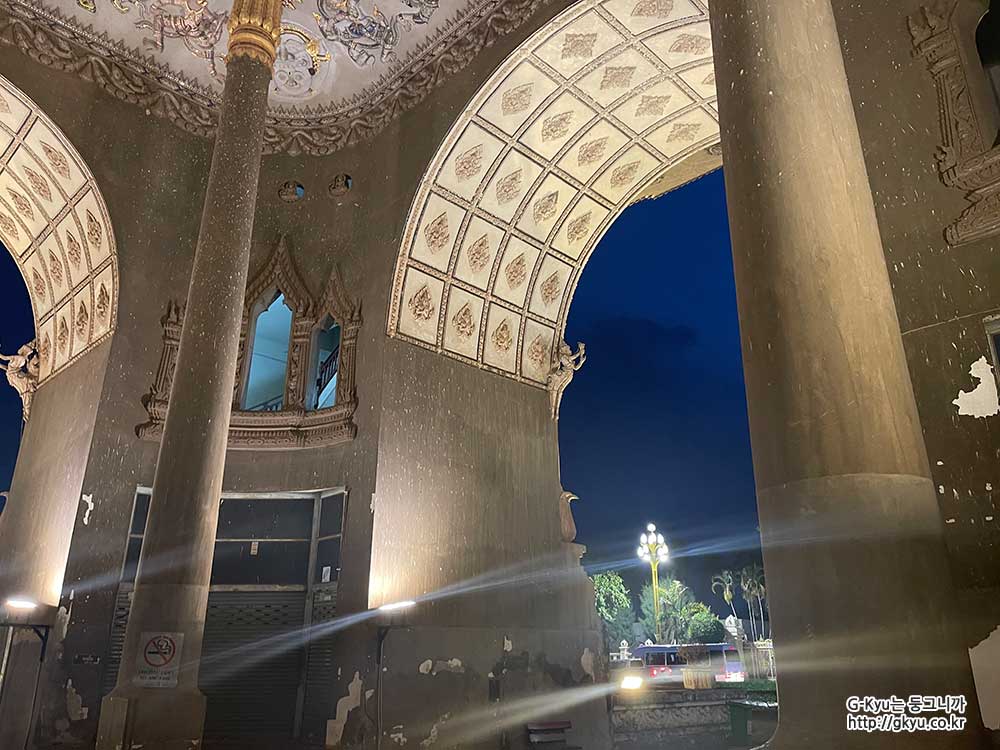
The gates are open on all four sides, and whenever the swallows flew in and chirped, the echoes made it sound like there were twice as many birds. A quick word of advice to future travelers: be mindful of the bird droppings on the ground. However, even if you try to be careful, they are almost impossible to avoid. Thankfully, the droppings were mostly dried and worn down by footsteps, leaving only faded traces. It gave me the impression that maintenance struggles to keep up with the birds’ relentless pace.
I had seen on YouTube that souvenir vendors usually set up shop around the monument, but perhaps because of the late hour, the area was empty of merchants. Curiously, even when I passed by during the day later in the trip, I didn’t spot them.
Nearby, there is a golden statue of a Kinnari—a celestial, half-human, half-bird goddess from mythology, keeping a watchful eye over the grounds.
Inside the Arch: Gods, Myths, and Needed Repairs
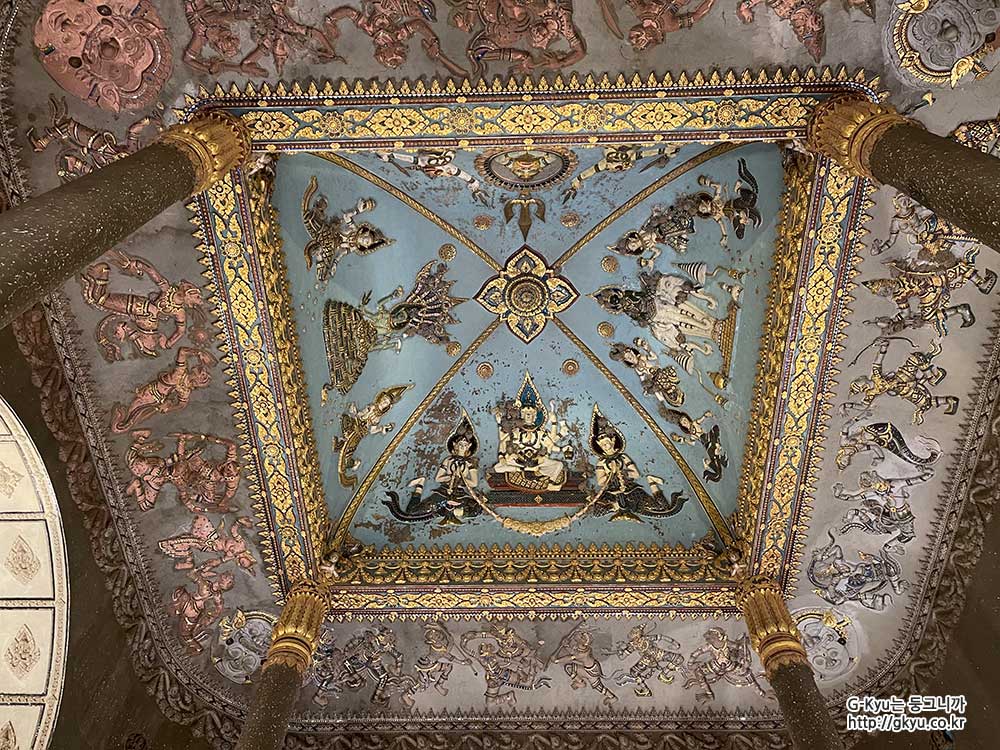
Standing directly under the arch and looking up, the ceiling is a breathtaking canvas of Hindu mythology painted against a vibrant blue background. Not being well-versed in Hinduism, I looked up the deities later to understand their roles:
- 12 o’clock: Brahma (The Creator)
- 3 o’clock: Vishnu (The Preserver)
- 6 o’clock: Shiva (The Destroyer)
- 9 o’clock: Indra (God of Weather and War)
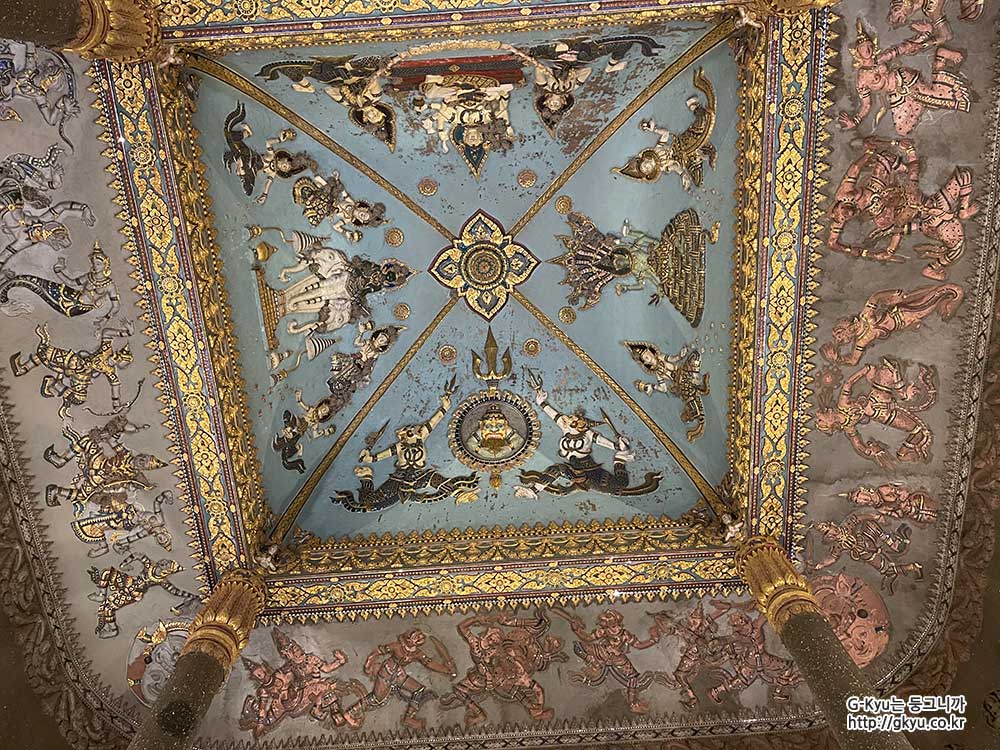
Looking at this celestial gathering, I couldn’t help but chuckle at the dynamics. I imagined Brahma and Vishnu might get along quite well, but Shiva—the destroyer—must be the odd one out. After all, if one creates and the other preserves, what happens when the third decides to destroy?
Surrounding the gods are intricate reliefs depicting the Epic of Rama and Sita (the Ramayana), which I learned is essentially the “Trojan War of the East.” It tells the story of Rama (an incarnation of Vishnu) teaming up with Hanuman (the Monkey King) to rescue his kidnapped wife, Sita, from the demon king Ravana.
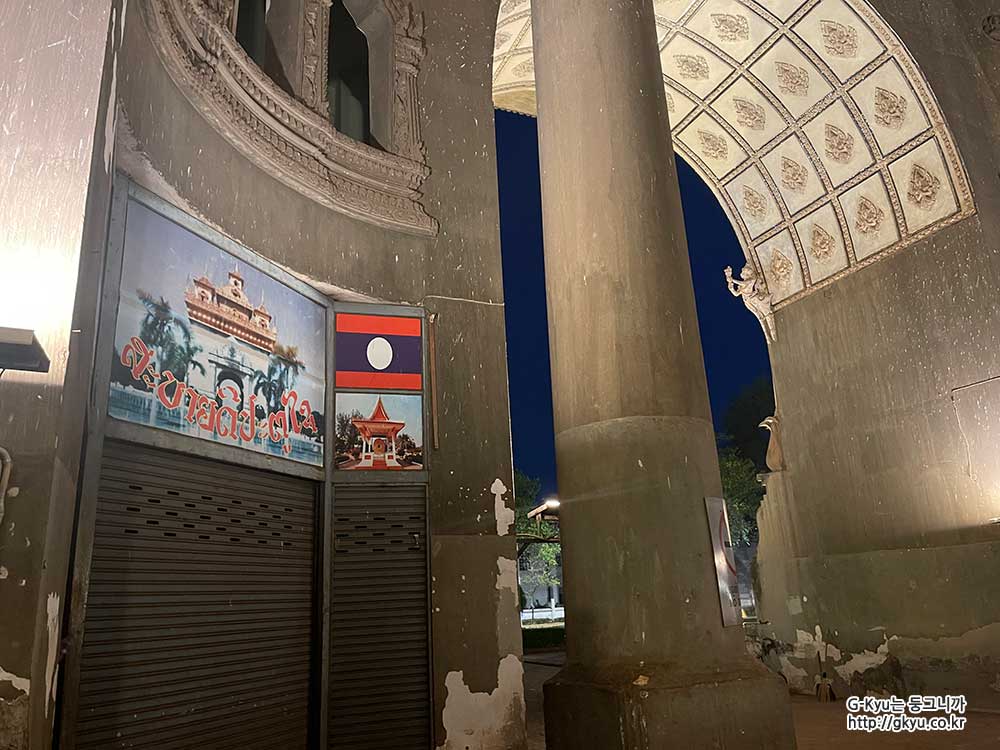
I had read online that visitors could climb to the Patuxai observatory for a panoramic view of Vientiane. I assumed it was simply closed because it was night, but my guide informed me that the observatory is currently shut down for necessary repairs. This was quite disappointing; since Vientiane lacks mountains, even a modest vantage point like Patuxai would offer a brilliant sweeping view of the city.
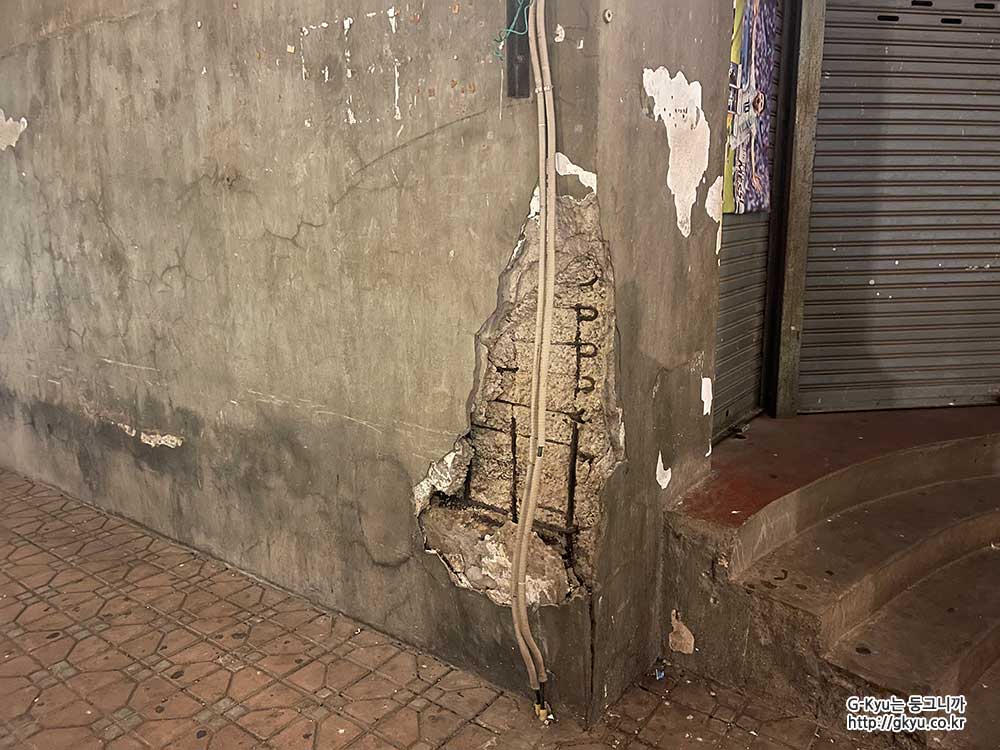
Looking closely, the need for repairs was evident. Certain areas looked worn and crumbling. In Korea, authorities would have immediately cordoned off and fixed such a major landmark. Here, it seemed left to the elements. I even noticed an exposed electrical distribution box on the right side. While it was likely locked, leaving it out in the open seemed like a bizarre and potentially dangerous oversight.
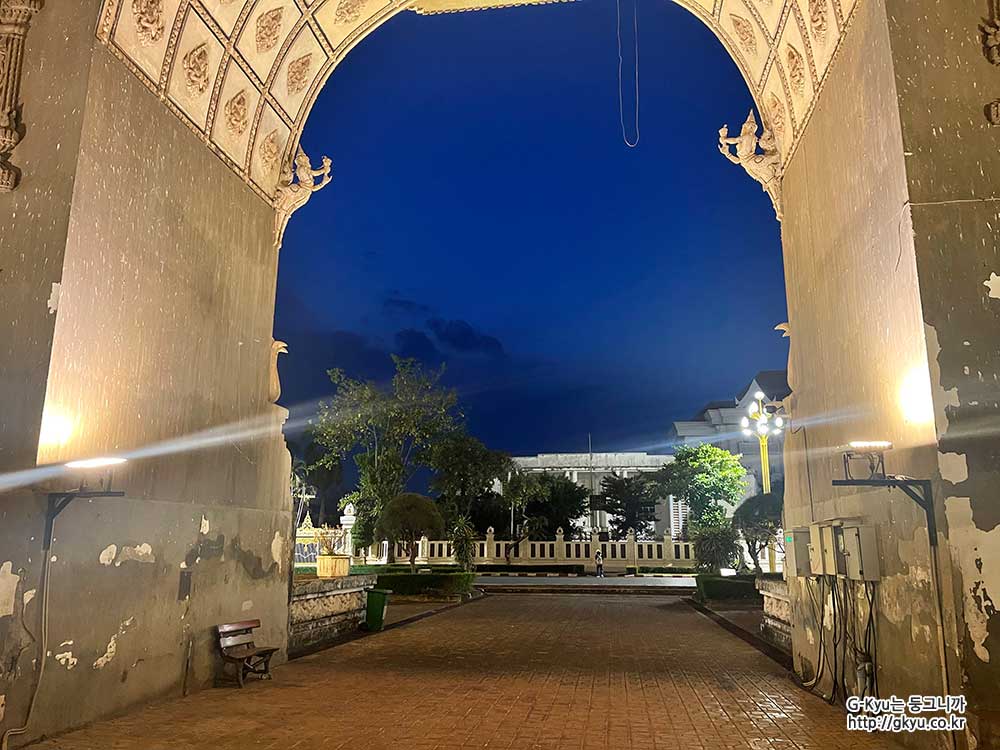
Despite these quirks, Patuxai retains a mystical atmosphere. In a city that isn’t overwhelmed by streetlights, it is one of the few places in Vientiane that shines brightly even after the sun goes down.
- Location: Patuxai Victory Monument
- Address: XJC9+7C3 P.D.R, Vientiane, Laos
Four Seasons Restaurant: A Malaysian Culinary Adventure
After a brisk tour of Patuxai, we returned to the car and headed to our original destination: Four Seasons Restaurant, a renowned Malaysian eatery. Having enjoyed traditional Laotian cuisine for lunch, it was time to explore Malaysian flavors for dinner.
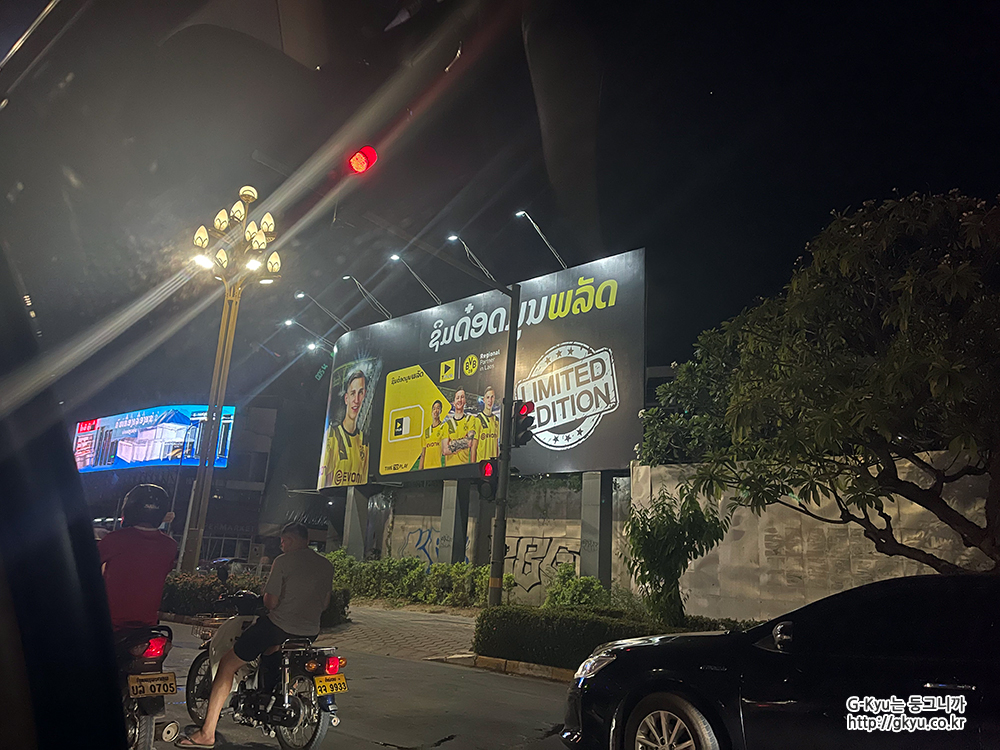
The restaurant was housed in a bustling three-story building, its parking lot packed with cars.
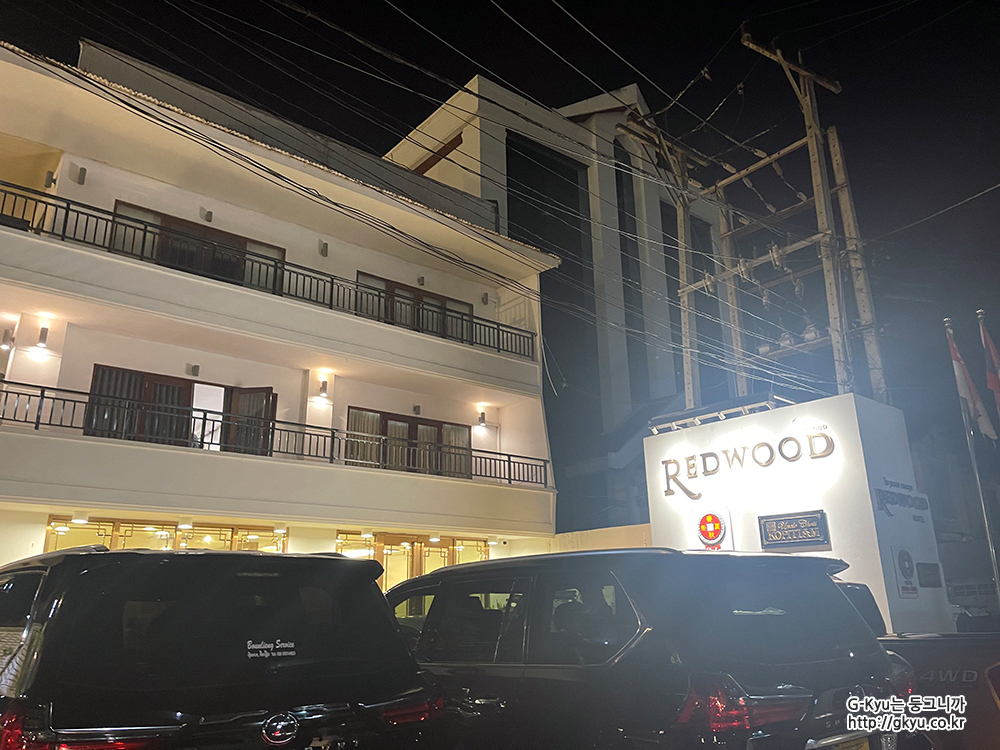
This complex seamlessly integrates the Red Wood Hotel, the Four Seasons Restaurant, and a Kopitiam (a Malaysian-Chinese café) under one roof.
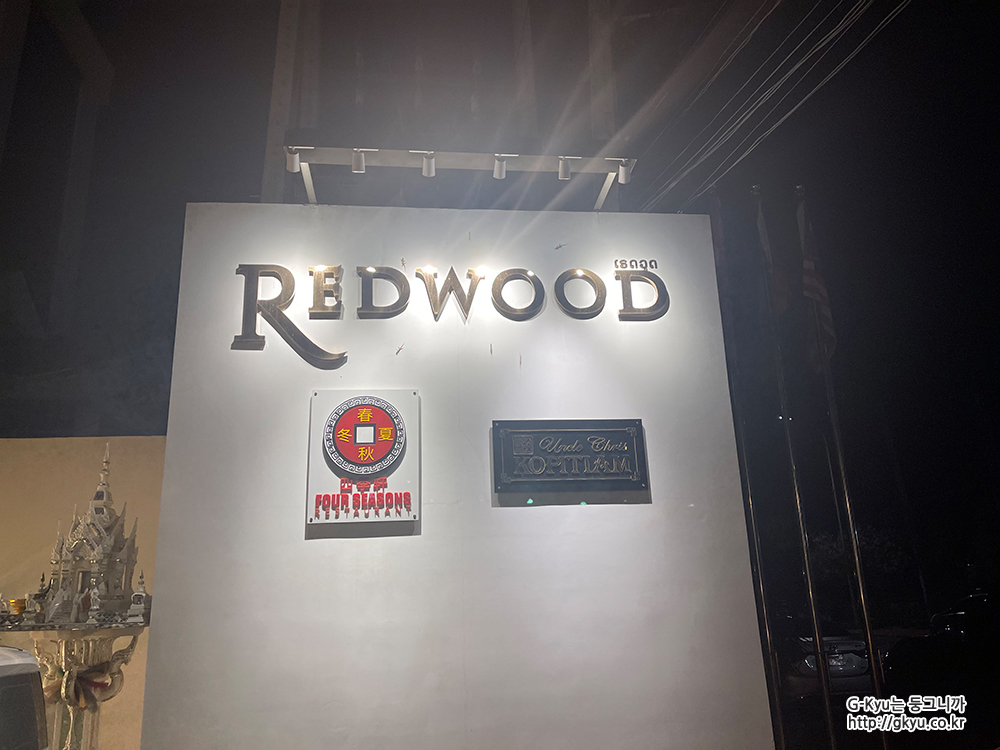
I must confess, I felt a mix of anticipation and anxiety. As someone who is notoriously picky with food, venturing into an entirely unfamiliar cuisine is daunting. While travel YouTubers seem capable of eating and praising absolutely anything, I am not so blessed.
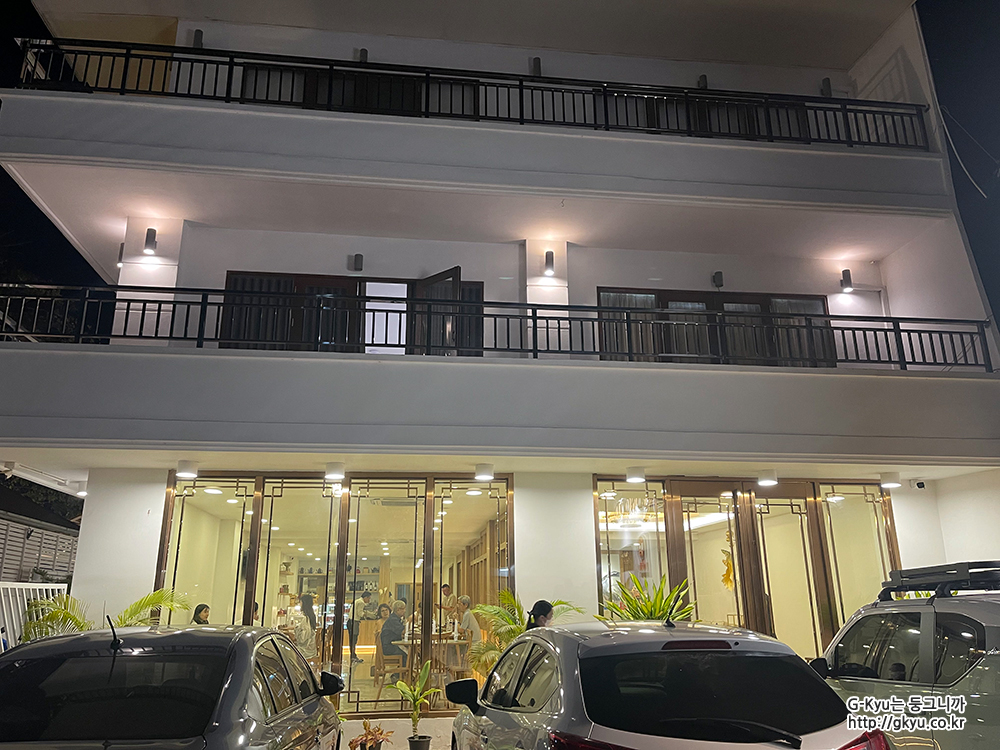
Adding to the pressure was the fact that my local hosts were treating me to a high-end, expensive meal. If I couldn’t eat well, I knew I would feel terribly guilty.
Inside, the restaurant was brightly lit and elegantly decorated. To the left of the entrance counter, a wall displayed various photos detailing the establishment’s history.
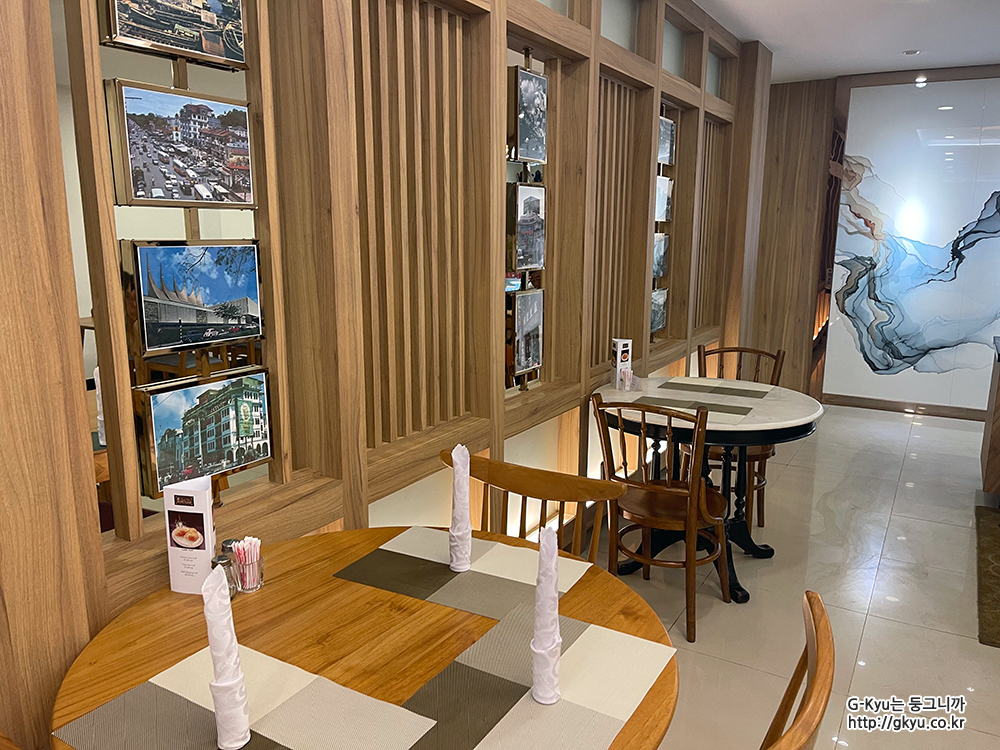
A quick look at Wikipedia taught me that a Kopitiam is a traditional coffee shop operated by the Chinese community in Southeast Asia. It felt like an Eastern take on a Western café—perhaps best compared to a modernized version of a traditional Korean Dabang (tea house).
Decoding the Kopitiam Menu
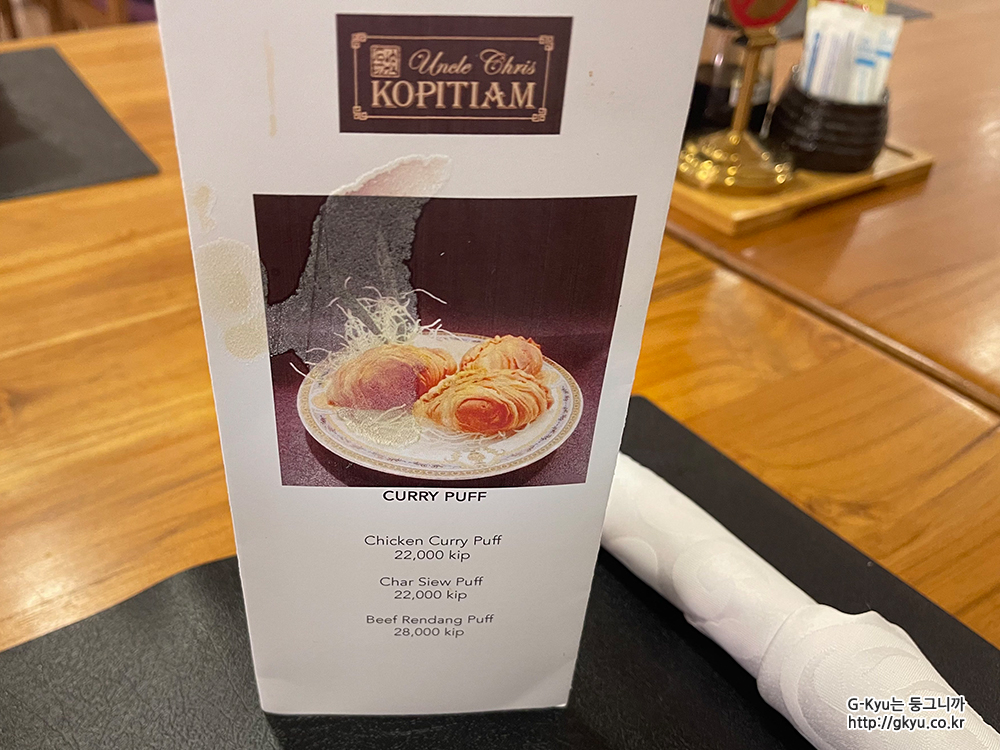
Applying my trusty Kip-to-Won mental calculator (detailed in Part 3), I scanned the prices:
- Curry Puffs (Chicken, Char Siew, Beef): 22,000 – 28,000 Kip (approx. 1,580 – 2,000 KRW).
- Desserts (Ice Kacang, Chendol, Bubur Cha Cha): Uniformly priced at 46,000 Kip (approx. 3,300 KRW).
- Rojak (Fruit/Vegetable Salad): Small 36,000 Kip / Large 66,000 Kip.
- Chwee Kueh (Steamed Rice Cake): 3 pieces for 36,000 Kip.
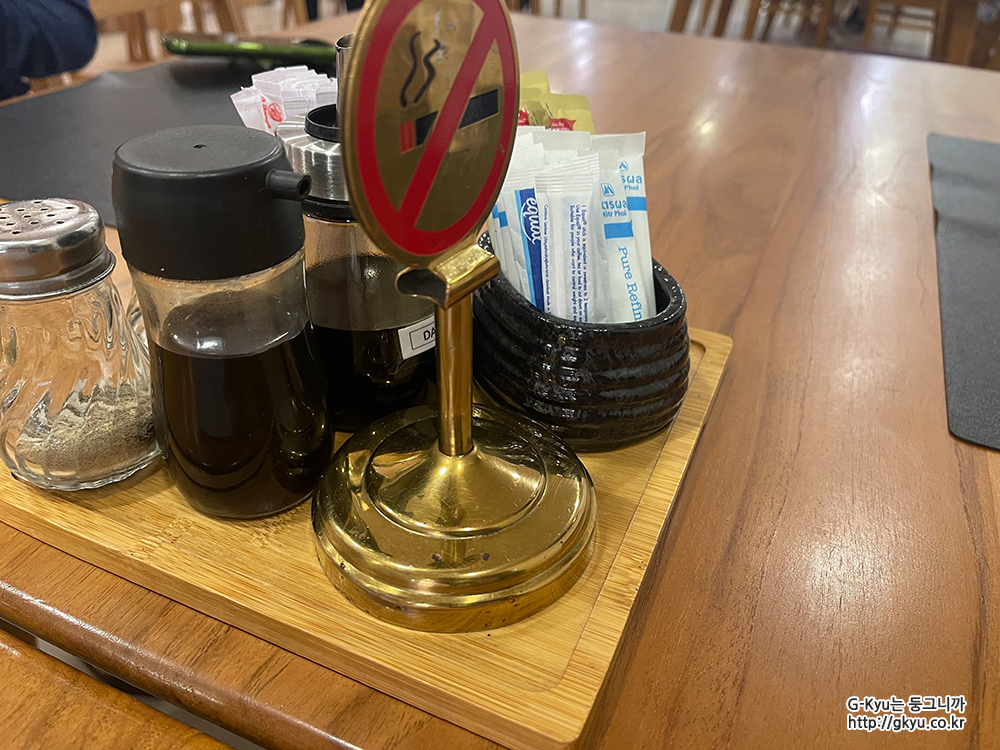
I noted a strict “No Smoking” sign near a cluster of condiments reminiscent of a Korean-Chinese restaurant. It seems Laos is keeping up with the global trend of indoor smoking bans.
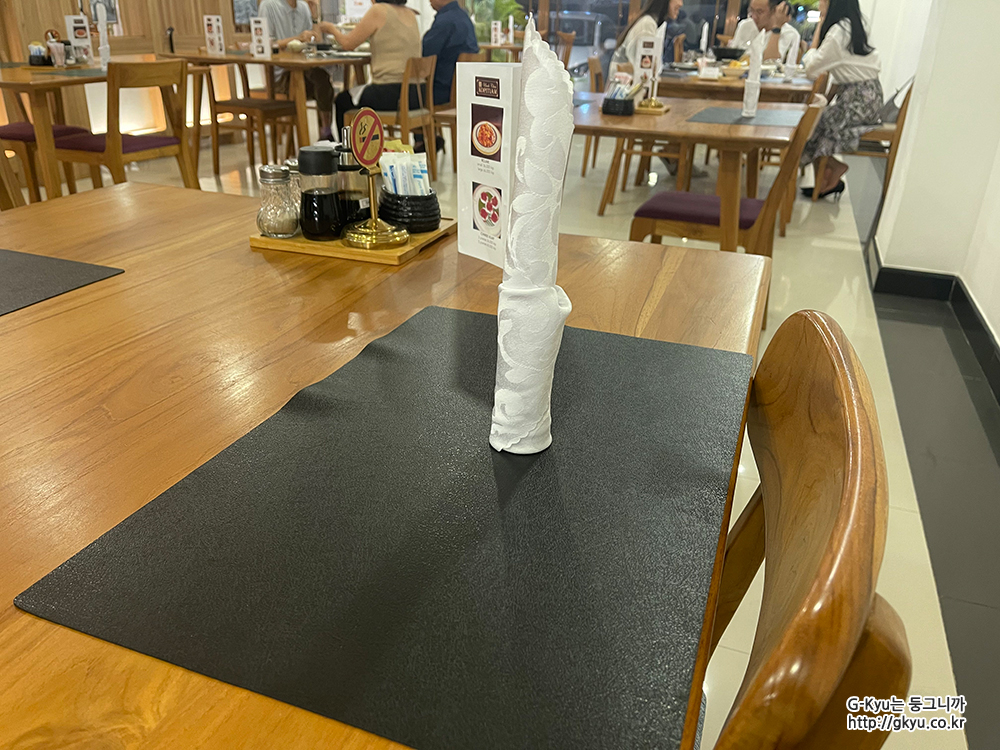
On the table, the individual tablecloths were tightly rolled and standing upright—a unique table-setting style I had never seen in Korea. I also spotted ‘Mitr Phol’ sugar packets, which I later learned is from Asia’s largest sugar producer based in Thailand.
A “Bear Grylls” Moment with Bak Kut Teh
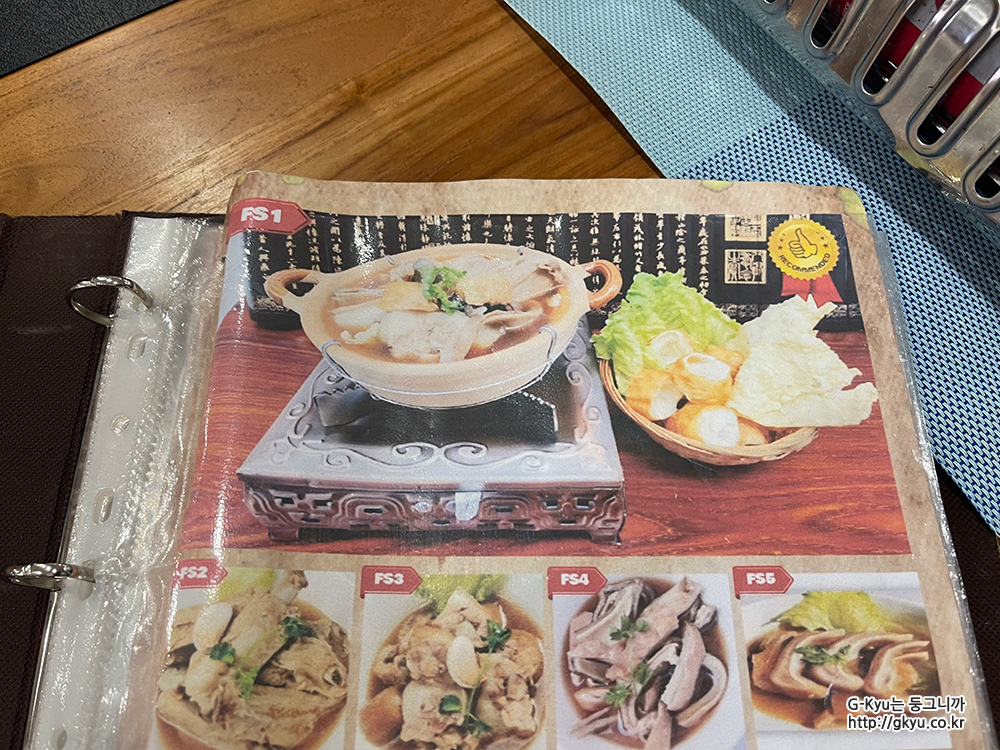
The restaurant’s highly recommended signature dish was Bak Kut Teh (Pork Rib Soup), priced at 78,000 Kip (approx. 5,500 KRW) per person.
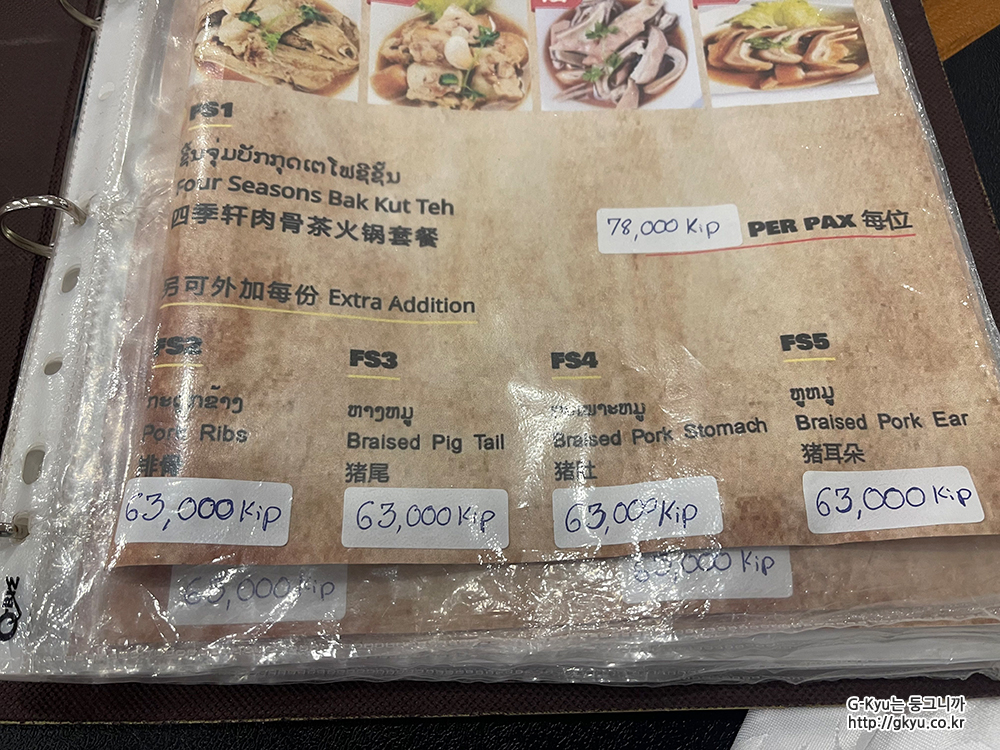
The menu also offered various add-ons to drop into the soup: Pork Ribs, Braised Pig Tail, Braised Pig Stomach, and Braised Pig Ear (all 63,000 Kip / approx. 4,410 KRW each). Reading through these unfamiliar, ultra-traditional ingredients, I suddenly felt like Bear Grylls embarking on a wild survival challenge!
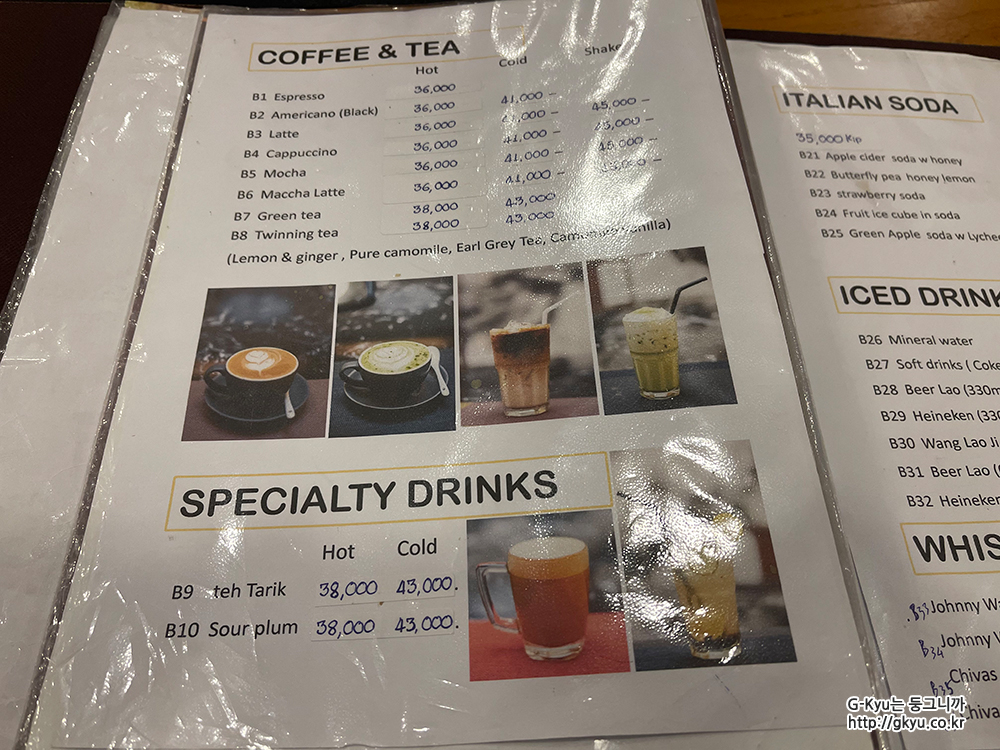
For drinks, they offered Hot, Cold, and Shakes. To try something truly local, I ordered an Iced Teh Tarik (43,000 Kip / approx. 3,200 KRW), a famous “pulled” milk tea made with strong black tea and condensed milk. Looking at the beverage prices, a 330ml Beerlao was only 23,000 Kip (approx. 1,700 KRW)—proving once again that beer in Laos is wonderfully affordable.
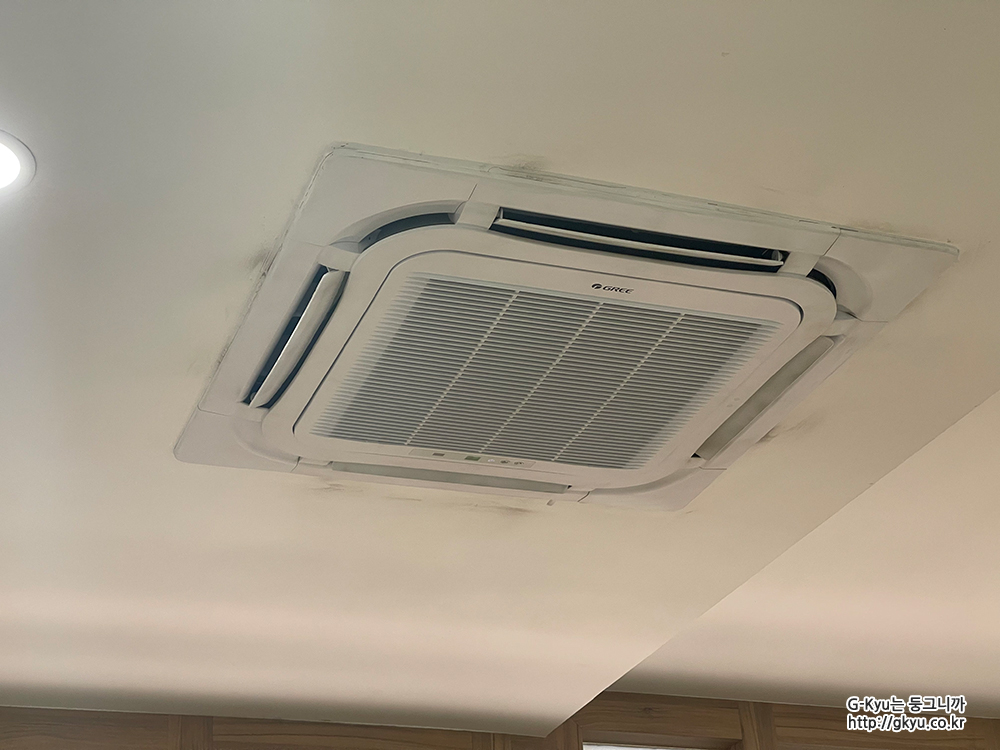
Looking up, I noticed the ceiling air conditioners were branded GREE, the world’s largest residential AC manufacturer from China. It brought a brief smile to my face, as “Gree” is also the stage name of a famous South Korean entertainer’s son.
The Feast Begins
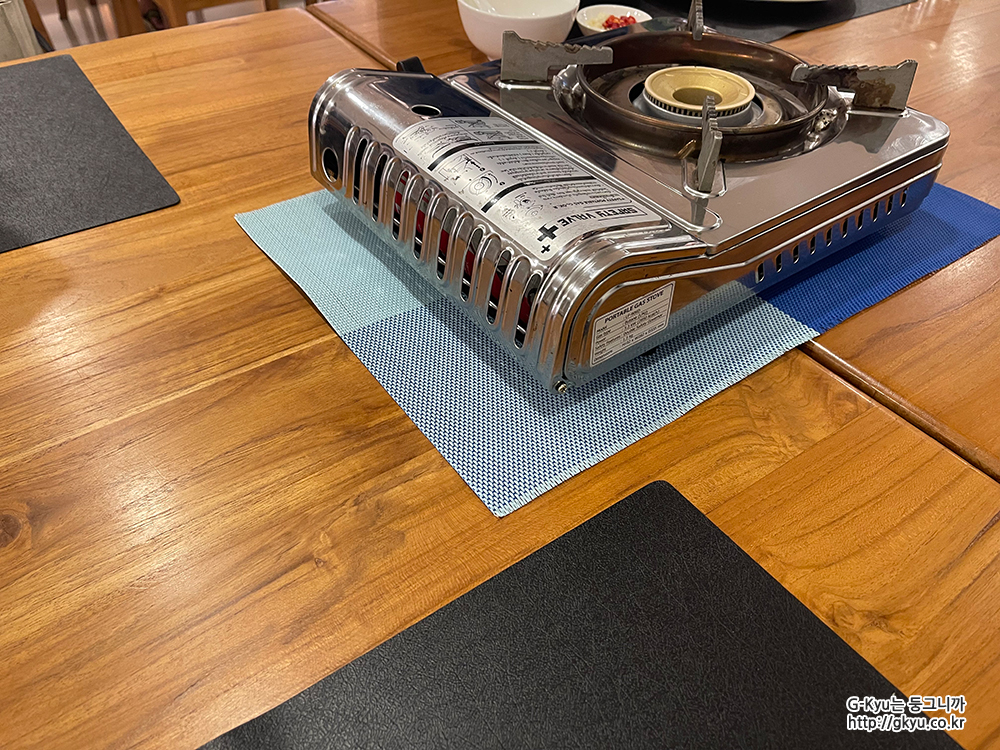
A portable gas burner was placed on our table, much like when you order a large chicken or duck stew in Korea.
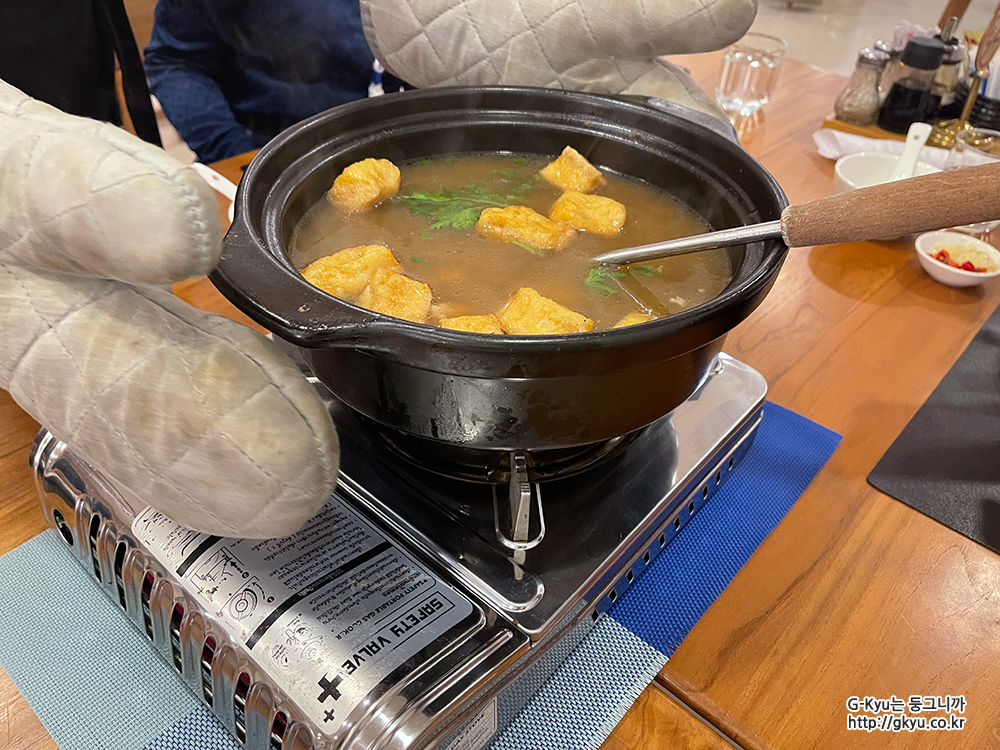
The Bak Kut Teh arrived in a massive communal pot, meant to be ladled out into individual bowls. We also requested the kitchen to pre-boil it to save time.
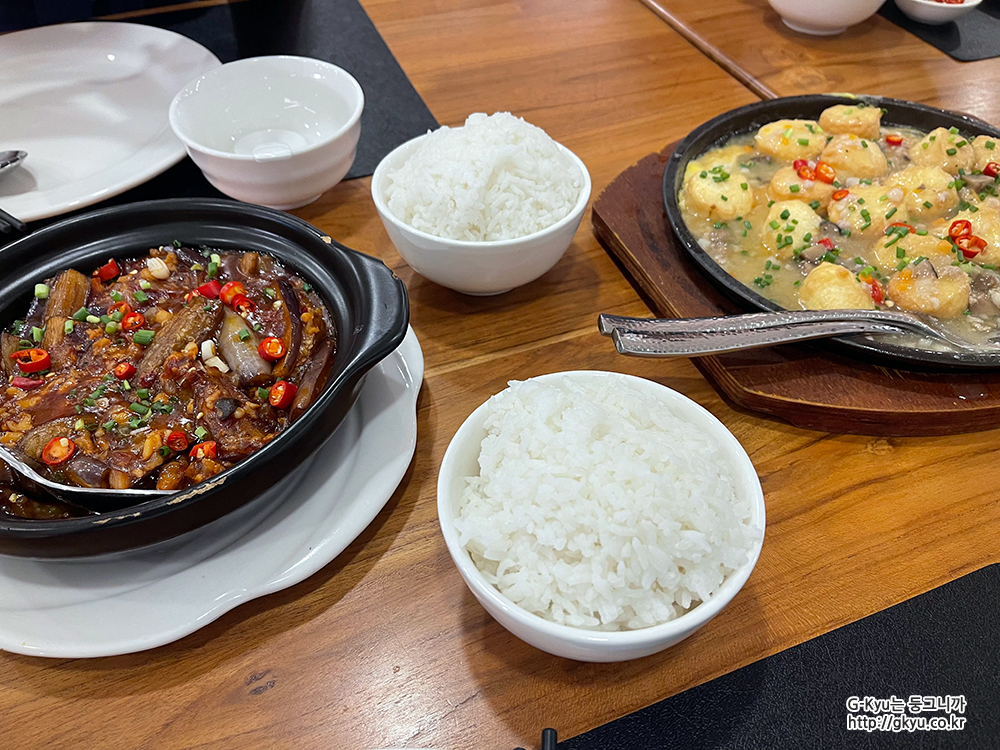
The accompanying rice was served in towering, generous portions. While it looked similar to Korean short-grain rice, the texture was slightly drier and fluffier. Interestingly, it had a very distinct, unique aroma. It didn’t smell like the natural scent of the rice grain itself; I suspect they might add a specific herb or essence to the water when cooking. I noticed this subtle fragrance in rice across various restaurants in Laos.
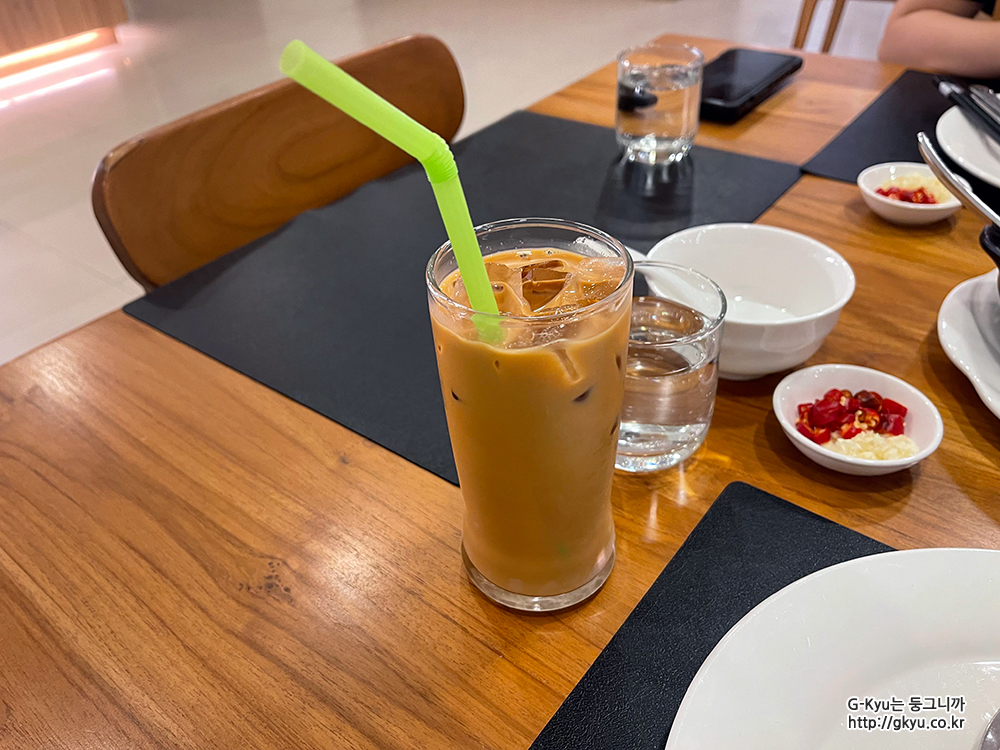
My Iced Teh Tarik arrived—it was incredibly sweet, delivering a massive hit of rich black tea and creamy milk.
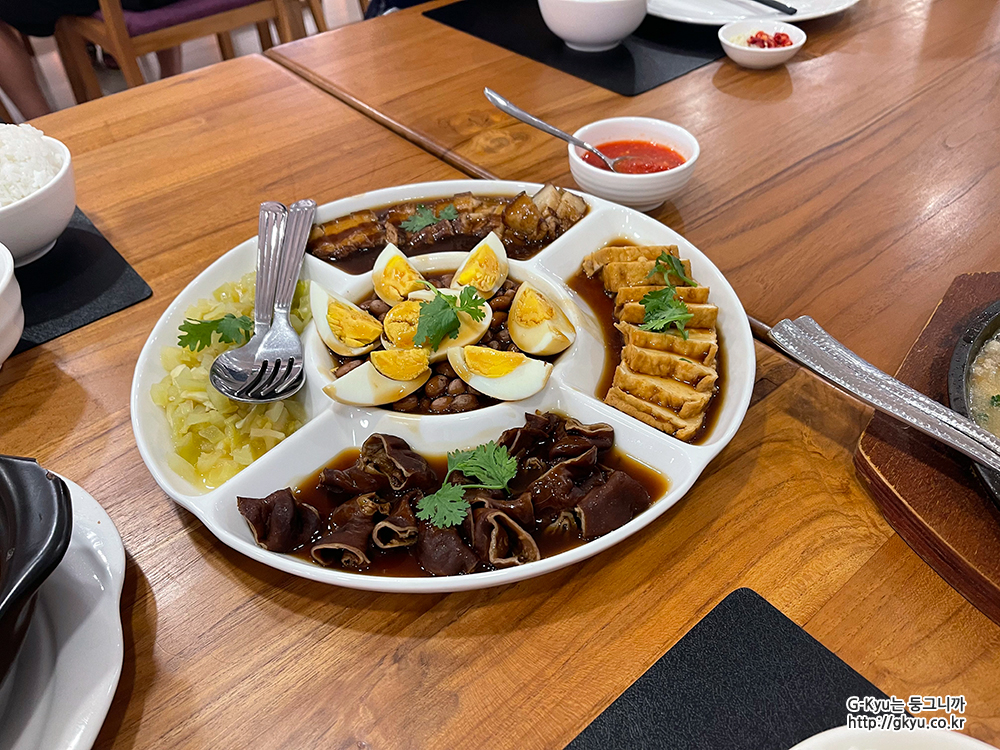
Then came an array of magnificent side dishes. Judging by older menu references (since I forgot to photograph the current prices), we were served:
- Fried Eggplant with Szechuan Sauce
- Sizzling Tofu with Minced Pork
- Braised Pork Belly
- Braised Pig Intestines
- Braised Tofu, Hard-boiled Eggs, and Peanuts
- Salted Vegetables
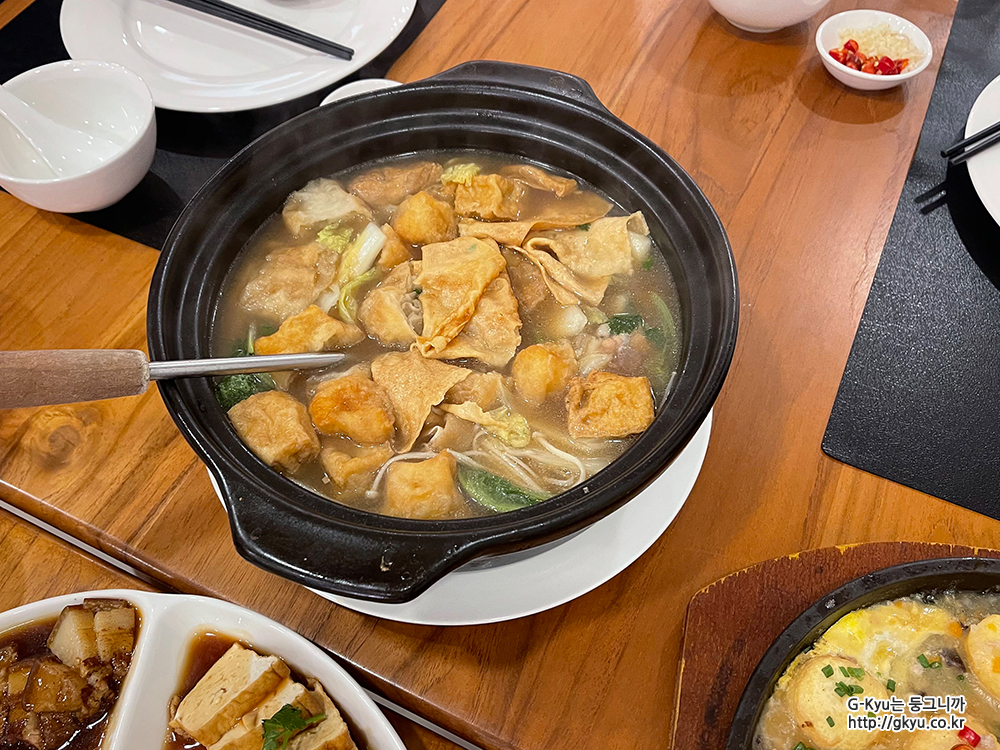
It was fascinating. The core ingredients—pork belly, tofu, eggplant, intestines—were entirely familiar to a Korean palate. Yet, the spices and marinades transformed them into something entirely foreign. Because the flavor profiles were so different from what I was used to, I couldn’t eat massive portions, but I deeply appreciated the culinary artistry.
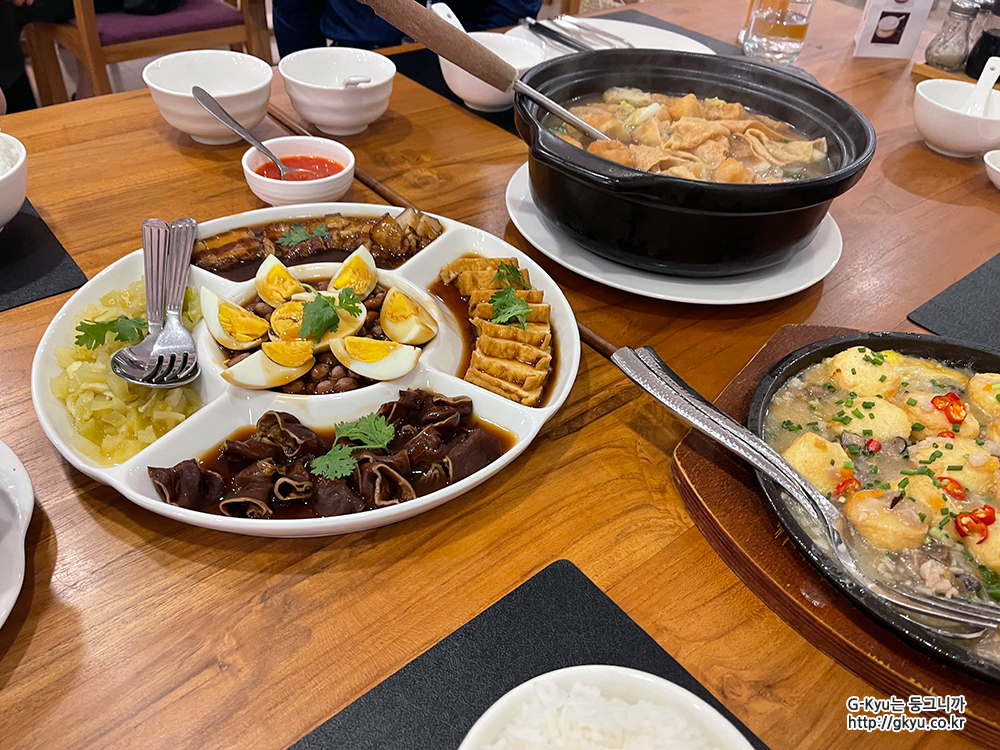
For the four of us, this massive feast came to about $35 USD (approx. 45,500 KRW, or 11,375 KRW per person). While incredibly cheap by Western standards, this is quite a premium price tag given the local cost of living in Laos—roughly equivalent to dining out at a nice Chinese restaurant in Korea.
- Location: Four Seasons Restaurant (Red Wood)
- Address: XJ76+QGG, Vientiane, Laos
Returning to the Familiar
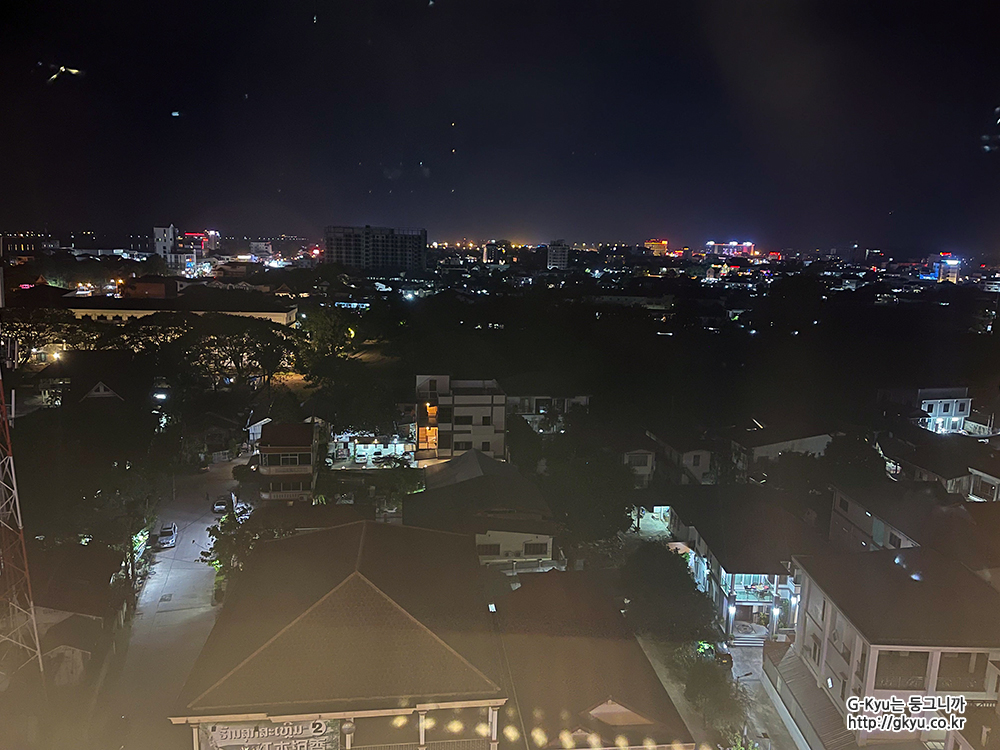
By the time we finished our leisurely one-hour meal and stepped outside, the bustling streets had gone dead quiet. Despite not being located in the absolute center of the commercial district, the silence of the Vientiane night felt as deeply still as the early hours of dawn.
Our hotel was only 1.6 kilometers away, so the drive back was swift. As I returned to my room, the reality set in: my second night in Vientiane was drawing to a close. Arriving late on the first night had felt chaotic, but today I had successfully navigated a fully packed itinerary.
Looking out the window before bed, the once-foreign cityscape was already beginning to feel like a familiar friend.